The Z32 300ZX Design Process
The development of the Z32 300ZX began with submissions from designers, though only one design was submitted for the 300ZX by Yamashita. While he was working on the Z32’s design proposal at home, he focused solely on this project.
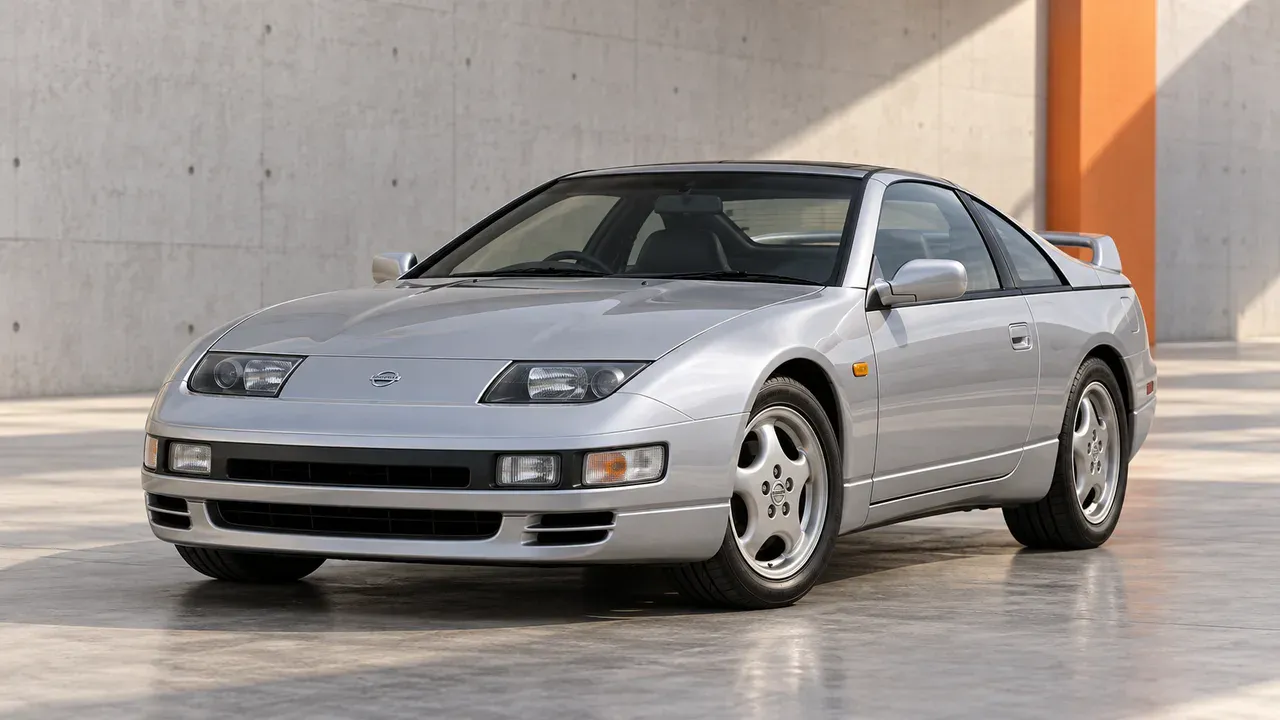
Yamashita’s design was ultimately chosen from all the submissions. Compared to the previous model, the Z31, his design was sleeker and more aggressive. It represented a shift away from the familiar 240Z-style look and aimed to move Nissan’s Z-series out of the 1980s and into the high-tech 1990s.
The design was heavily influenced by American car culture. Yamashita visited the United States to understand why the original 240Z had been such a popular vehicle. Consequently, he redesigned the proportions of the 300ZX, making it lower and wider to fit the wide-open spaces of America, a contrast to the much narrower streets in Japan.
A major focus of the design was aerodynamics. The goal was to replace square-edged, boxy looking cars with smoother, more aerodynamic vehicles, as these were considered more modern and efficient.
Engineering presented several challenges. Yamashita’s approach to the headlight design was a point of contention. He designed them with large clear covers at a 60-degree angle, referencing the original 240Z. While engineers suggested changing this angle to 45-degrees for ease of design, Yamashita maintained his original vision.
To resolve the design issues, Yamashita and the engineers developed a solution using very small projectors, a design that was new at the time. The resulting headlamps would later appear in the Lamborghini Diablo. Furthermore, the curved shape of the 300ZX created numerous engineering obstacles. Yamashita was determined regarding the smooth, curvy lines of the design, resulting in over 30 prototypes being rejected.
The 300ZX launched in 1989 and continued to be produced until the year 2000.
Read the full guide: Nissan 300ZX Buying Guide