Nissan GT-R R33 Design Details
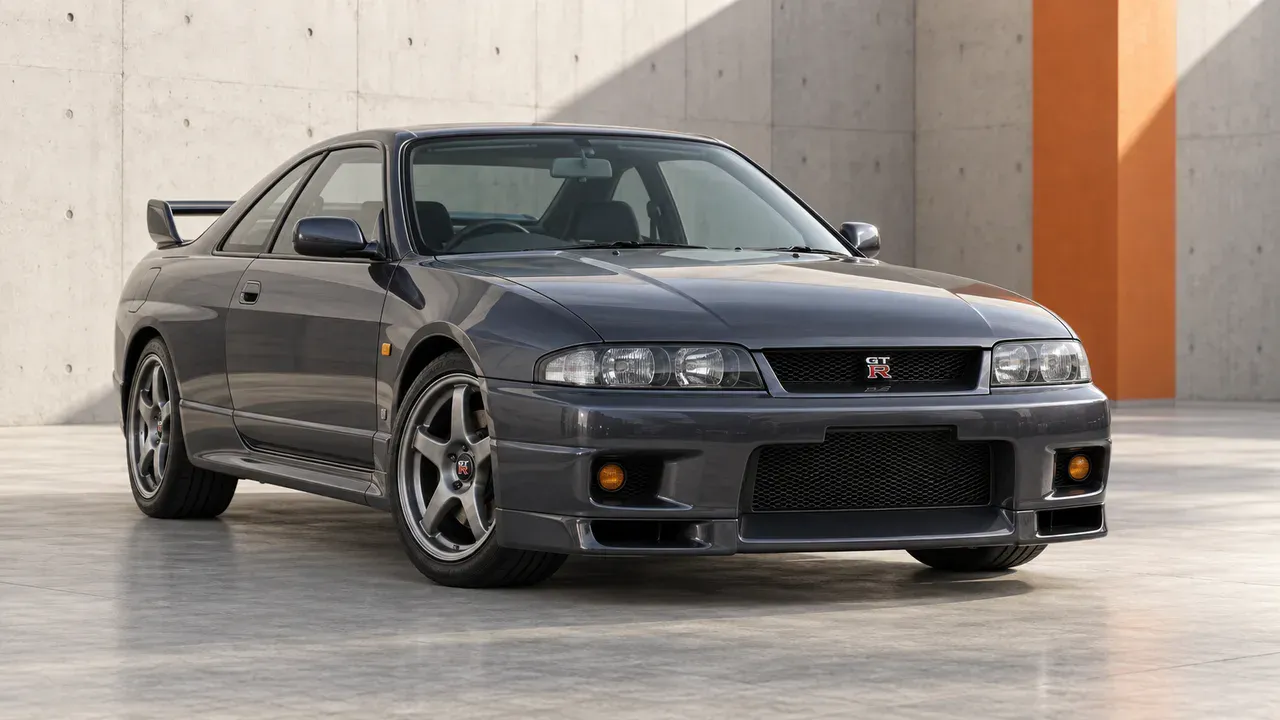
The R33 GT-R was developed as the fourth generation of the Skyline GT-R line, following the reputation established by the R32 model. When the R33 GT-R launched in 1995, it utilised the RB26 engine, delivering a power figure of 276bhp, paired with a five-speed gearbox.
Engine performance remained consistent, but Nissan implemented changes to address issues noted in the R32. A new wider oil pump drive collar was installed to prevent failures in higher power applications. To improve overall performance, Nissan focused on the vehicle’s structure and exterior. The introduction of new side skirts, a rear wing, and an airdam reduced the drag coefficient from 0.4 to 0.35, unless the rear wing was adjusted for downforce.
The chassis also received substantial internal reinforcement. Front and rear braces were used to hold the suspension strut towers together, along with stronger sills and a stiffening panel fitted behind the rear seats. However, this extra strengthening resulted in a weight gain of around 100kg compared to the R32 GT-R. This combination of the same power output and increased weight meant the R33 GT-R exhibited less enthusiasm.
To manage the increase in weight, greater stopping power was required. Nissan fitted Brembo brakes featuring ventilated discs measuring 324mm at the front and 300mm at the rear. This represented an increase of 28mm and 3mm, respectively, over the R32 GT-R specifications. The car was fitted with 9 x 17in rims and 245/45 R17 tyres as standard.
Handling was improved through the updated ATTESA E-TS four-wheel drive system and the Super HICAS steering. While most four-wheel drive systems operate using a 50:50 or 60:40 split, the R33 GT-R’s system typically sends 100 per cent of its power through the rear wheels. This allows the front wheels to be free to steer under most conditions.
The Super HICAS system was designed to reduce understeer. It uses a small steering rack acting on the back wheels to increase the rate of turn-in. These systems together improved performance on rougher roads.
In 1996, the LM Limited R33 GT-R was released. This model featured the N1’s bonnet and front bumper ducts, and it was produced in limited numbers. Nissan produced a total of 188 LM R33 GT-Rs, comprising 86 GT-R LMs and 102 V-Spec LMs.
Read the full guide: Nissan GT-R R33 Buyers Guide