Leaf Purchase and Inspection Guide
When planning to inspect a first generation Nissan Leaf, it is recommended that you view the vehicle in person or arrange for a reliable third party to do so. If you are unable to view the Leaf yourself, a friend or helper can provide a second pair of eyes.
It is useful to view the Leaf at the seller’s house or place of business to assess the parking conditions and the roads the car is driven on. If the roads are rough and full of potholes, the suspension and steering components may have taken a battering. If you are viewing a Leaf at a dealer, it may be wise not to inform them that you are coming to look at the car, as this gives them less chance to hide potential issues.
When inspecting a used Leaf, be cautious about checking it in the rain, as water on the bodywork can cover up issues such as accident damage repairs. Similarly, if the Leaf has just been washed and still has water on it, it could be a sign the seller is trying to hide an issue. Always get the seller to move their Leaf outside if it is in a garage or showroom, as indoor lighting can cover issues that direct sunlight may have revealed.
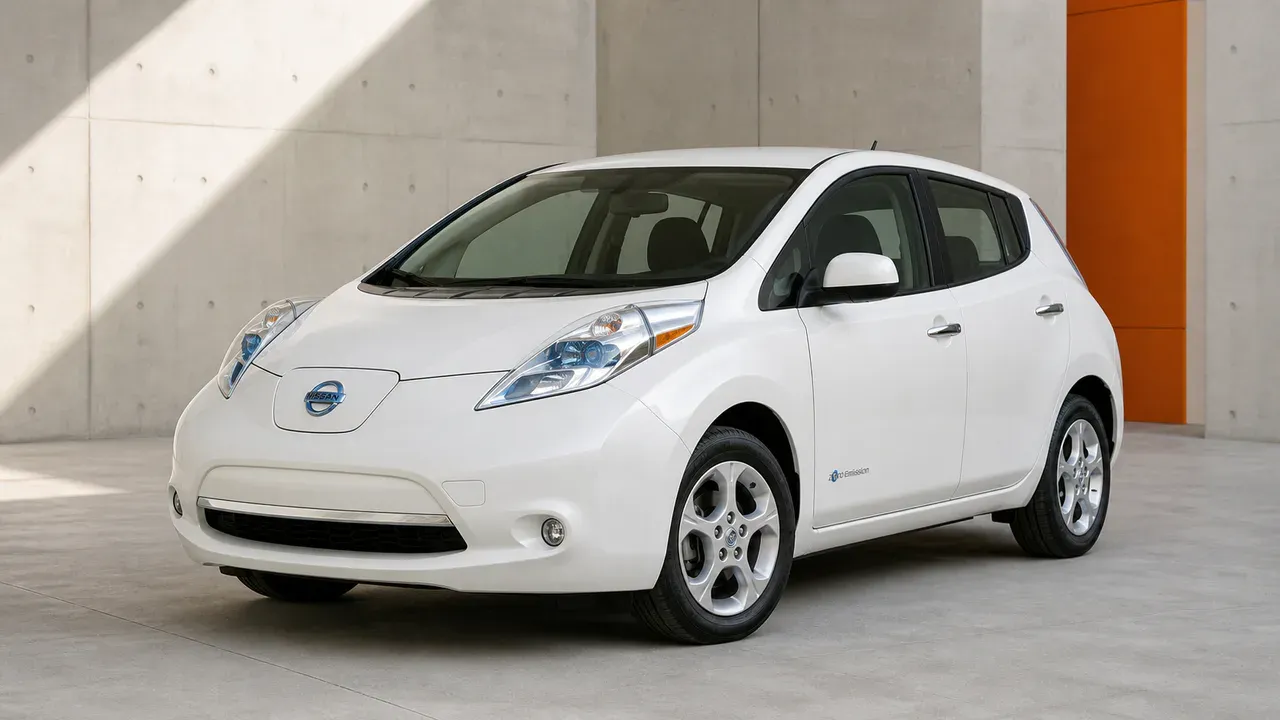
When deciding what year model Leaf to buy, the later 30 kWh models are noted as being a better overall car than the early versions. These models offer a bigger range and more features, and many of the issues found on the first Leafs have been addressed. However, 2016 and 2017 models command a higher price than earlier cars.
Leaf models produced before April 2013 have awful battery packs, making them best avoided unless you only have to travel a very short distance.
The 2011/2012 models featured two packages: the SV, the base trim, and the SL trim, which added items such as a solar panel spoiler and automatic headlights.
From 2013 onwards, the “S” (Visia) model joined the line-up as the base model. Compared to the SV and SL, this model featured several downgrades, including projector beam headlights instead of LED ones, and 16-inch steel wheels rather than alloy wheels. The S model also lacks a navigation system and remote connectivity for climate control or battery monitoring. Furthermore, the 6.6 kW on-board charger was optional. It is suggested to avoid any Leaf S that was not fitted with the optional 6.6 kW on-board charger, as charging time is increased dramatically.
Read the full guide: Nissan Leaf