Third Generation Subaru WRX Updates
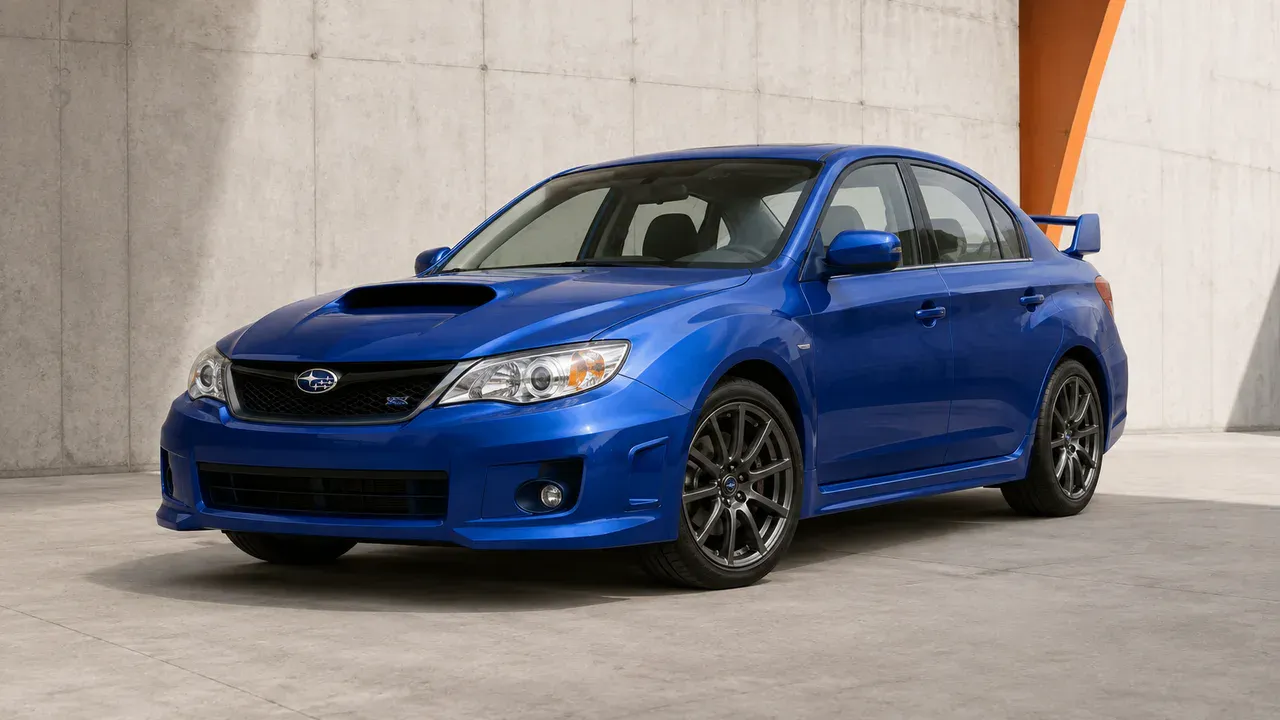
Subaru launched the third-generation WRX, alongside the third-gen Impreza, at the New York International Auto Show in 2007. The WRX adopted a more rounded, refined look, continuing a design theme established on the Impreza. Inside, the cabin was described as roomier and more spacious, with an emphasis placed on comfort and utility. Premium trim tiers offered additional features, including satellite navigation and a 7-inch screen.
The standard model features a 2.5-litre turbocharged EJ255 engine, which is mounted lower to improve stability. This engine delivers 227 PS (224 bhp/ 167 kW) at 5,200 rpm, producing 306 Nm (226 lb-ft) of torque at 2,800 rpm. These figures translate to a 0 – 100 km/h (62 mph) time of around 5.7 seconds and a top speed of 210 km/h (130 mph).
WRX options included either a 5-speed manual or a 4-speed automatic transmission, both of which were advertised as shifting faster than those on the previous generation. A significant change to the standard model was the deletion of the rear limited slip differential, which was replaced by a new VDC (Vehicle Dynamics Control) system. This VDC system was the first time it had been added to a WRX model and was designed to improve the capabilities of the AWD system.
WRX STI Specifications
The WRX STI launched later that year at the Tokyo Motor Show, featuring a design that set it apart from the standard WRX. The STI included widened body flares, new bumpers, side skirts, a large rear spoiler, and dual-tail pipes. Engineers redesigned the front bumper and fenders specifically to help minimise lift forces, which aids stability at higher speeds.
The STI’s interior featured front bucket seats finished in a combination of Alcantara and leather, with options for specifically designed RECARO bucket seats. The primary mechanical change occurred under the bonnet. Japanese domestic market cars were fitted with a 2.0-litre EJ207 engine and a twin scroll turbocharger. This setup produced up to 308 PS (304 bhp/ 227 kW) and 422 Nm (311 lb-ft) of torque at 4,400 rpm. Japan’s “gentlemen’s agreement”, which capped advertised power at 280 PS (276 bhp/ 206 kW), ended in 2005, so unlike the previous generation Subaru could advertise the third-generation STI above that limit.
Read the full guide: Subaru WRX Gen 3 Buyer’s Guide