The Evolution of the Peugeot 205 GTI
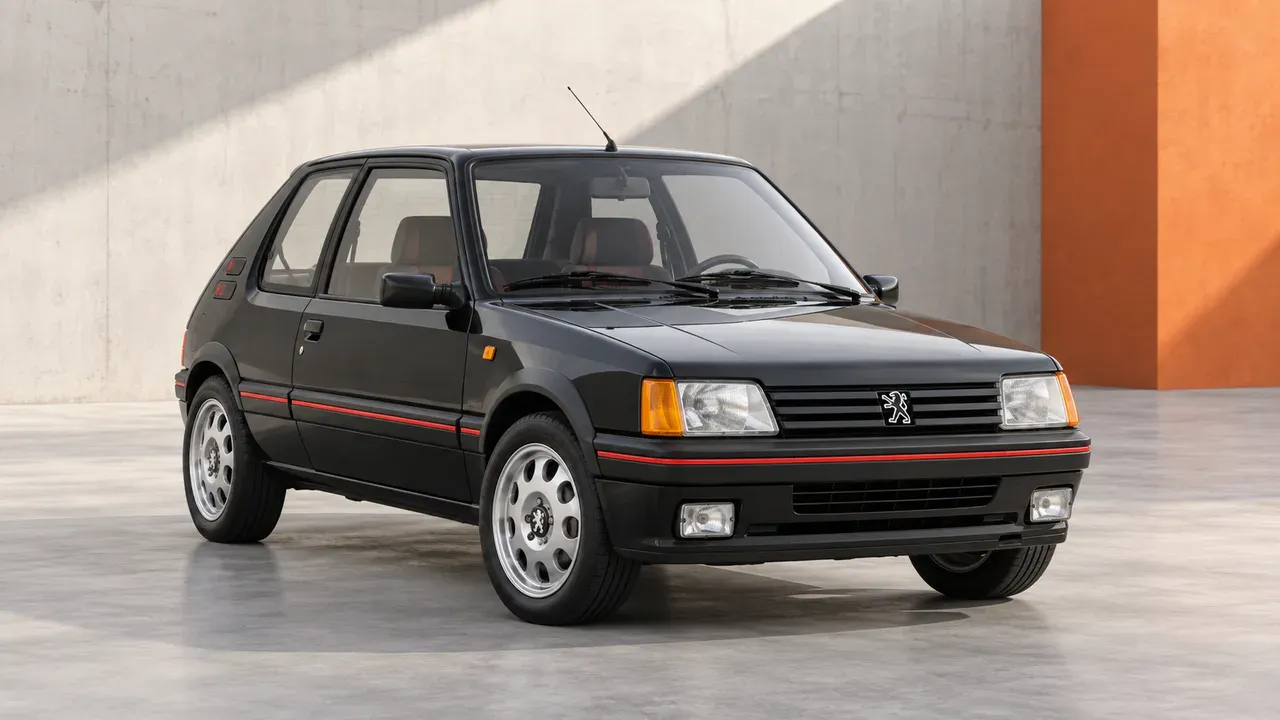
The Peugeot 205 was launched in 1983. Over its 15-year production run, the standard 205 sold more than 5 million units, helping to turn the French car company’s fortunes around. Peugeot created the 205 to fill a gap between the 104 Supermini and the 305.
Recognising the 205’s sporting potential, the 205 GTI was introduced one year after the standard car. Initially, the GTI was offered with a 1.6-litre XU5J engine producing 105 horsepower. This engine allowed the 205 GTI to achieve a 0-62mph (100km/h) time of as little as 8.7 seconds.
In 1986, Peugeot updated the 1.6-litre model with the XU5JA engine, which now produced 115 horsepower. The top speed with this update improved to over 120mph (193km/h). Along with this update, a 1.9-litre version of the GTI was launched, utilising the XU9JA engine. This 1.9-litre version produced 130 horsepower and achieved a 0-62mph time of 7.8 seconds, reaching a top speed of 127mph (204km/h).
The two engine options presented different driving characteristics. The 1.6-litre engine is noted as being more revvy and eager, while the 1.9-litre version is described as lazier and torquier.
The main external differences between the two models involved the braking system, seating, and wheel size. The 1.6-litre version featured drum brakes on the rear and used cloth seats and 14-inch alloys. The larger 1.9-litre model came equipped with all-round disc brakes, half-leather seats, and 15-inch alloys.
Peugeot also gave the 1.9-litre model a stiffer suspension setup to reduce pitch and roll. This modification resulted in a slightly harsher ride, but it also made the oversteer more progressive, giving the driver more time to react. However, its extra torque made the 1.9-litre more prone to wheelspin when driven enthusiastically.
In 1986, Peugeot also introduced soft-top variants, known as the 205 CTI. The CTI was available with both the 1.6-litre and 1.9-litre options and featured plastic wheel arches and trim, larger wheel arches, and redesigned bumpers. Peugeot further refined the suspension for the GTI/CTI, incorporating stiffer springs, different wishbones, and a drop-link anti-roll bar.
Read the full guide: Peugeot 205 GTi Buyers Guide