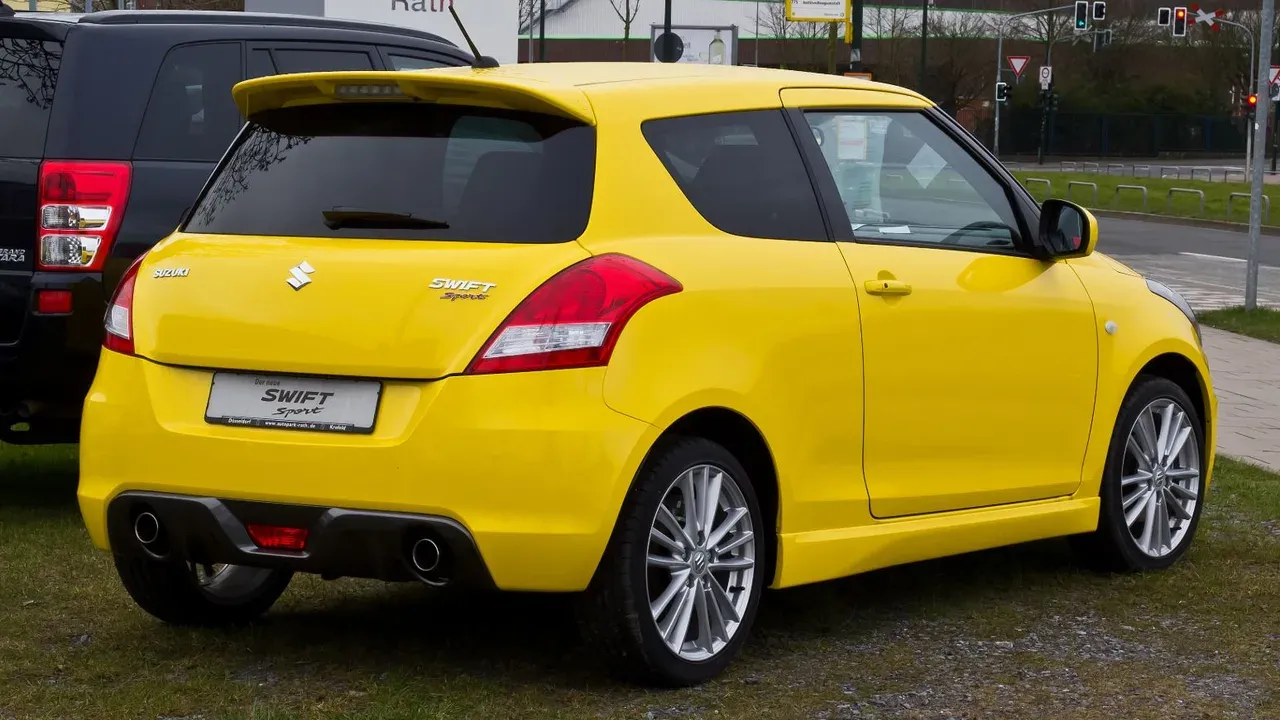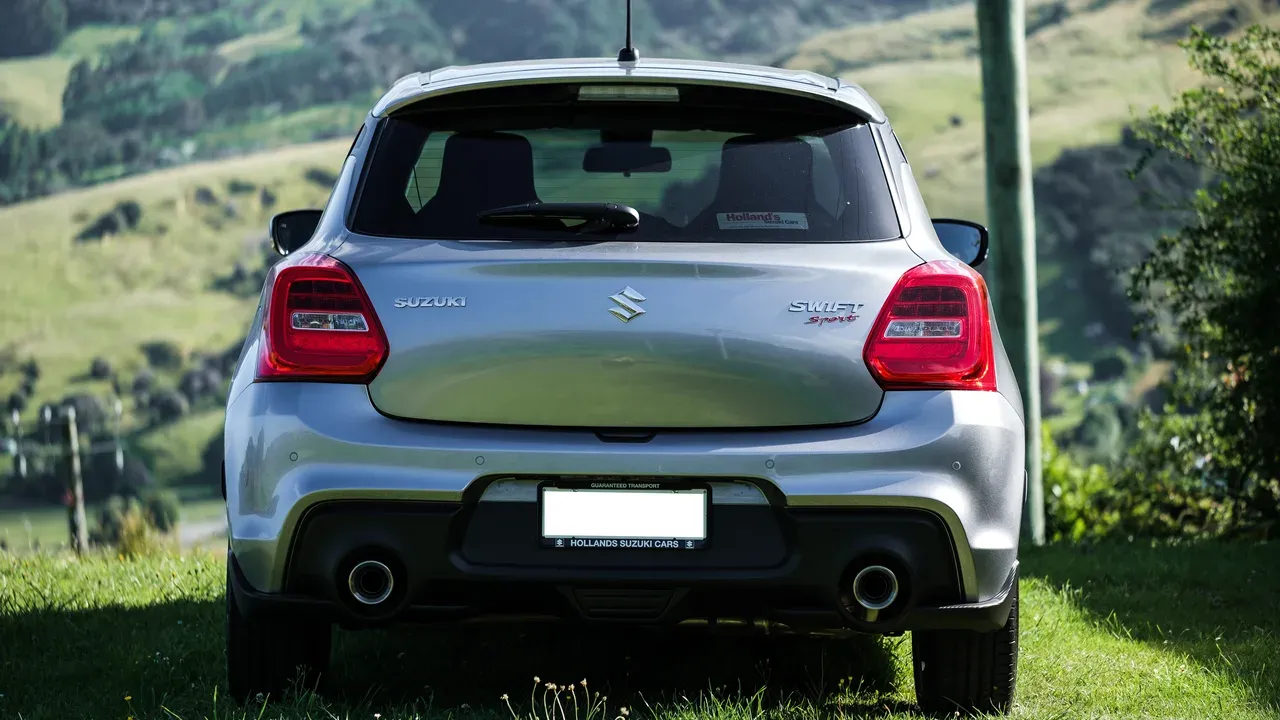
The different generations of the Suzuki Swift Sport are some of the greatest small performance cars on the road today. While they don’t set the world alight with their performance figures, they are great fun to drive and can also be used comfortably as a daily driver.
We have put together a complete used car buyer’s guide for the different generations of the Suzuki Swift Sport from the first generation to the latest generation. Note: much of the information in the buyer’s guide section of this article will also relate to non-Sport models from the second-generation onwards as well.
How To Use This Suzuki Swift Sport Buyer’s Guide
This Suzuki Swift Sport Buying Guide covers a lot of information and as such we have broken it down into a number of different sections. To start with we will be looking at the history and specifications of the Suzuki Swift Sport.
Following this we will be looking at specific problems on each individual model and then more general car buying & inspection advice. To finish off the article we have included information on how to import a Suzuki Swift Sport from Japan. You can skip to the specific sections by using the table of contents below.
The History of the Suzuki Swift Sport
First Generation Swift Sport (2005 - 2012)
The original Suzuki Swift launched in 1983, but it wasn’t until October 2005 that the company would launch the first Sport model (Swift RS in Japan). Suzuki based the Sport on their second-generation Swift platform and the car was introduced into European markets in September 2006.
The Suzuki Swift Sport was given an enhanced 1.6-litre M16A DOHC four-cylinder engine that featured a compression ratio of 11.1:1, high lift cams, strengthened valve springs and forged pistons. All these updates meant that the little Suzuki produced as much as 123 Brake horsepower (92 kW) and 148 Nm (109 lb ft) of torque.
Along with updating the power unit, Suzuki also modified the exterior of the Swift Sport. They elongated the Sport by 70 mm (2.8 inches) and gave the car new sportier bumpers and spoilers. Twin exhaust tail pipes were also added along with 16 or 17-inch wheels (depending on the model and market).
Cornering performance was also improved via a stiffer suspension setup and the car was given four-wheel disc brakes. On the inside the Swift Sport retained much of the standard car’s trim, but was given red sport seats (Recaro seats were an optional extra).
Second Generation Swift Sport (2012 – 2017)
With the success of the first-generation Swift Sport, Suzuki decided to create a new version based on the third-generation Swift platform in 2012. The new Swift Sport featured a revised 1.6-litre four-cylinder engine that produced as much as 130 horsepower (100 kW) and 160 Nm (120 lb ft) of torque.
Buyers were given the option of either a six-speed manual transmission or a high performance seven-speed CVT transmission with paddle shifters.
On the outside, the second-generation Suzuki Swift Sport was given a new rear spoiler, a new body-kit, a larger front grille and lightweight 17-inch alloy wheels. The car was also lower than the standard model and featured a slightly stiffer suspension setup.
The second-generation Sport received new leather bucket seats with sporty red stitching and a “Sport” logo. A new steering wheel and different instrumentation rounded up the interior alterations.
In January 2014, Suzuki updated the Swift Sport with a 6.1-inch combined satnav/dab radio infotainment system.
Suzuki Swift Sport SZ-R
UK buyers were given the option of a special edition version of the Swift Sport known as the SZ-R. It was limited to 100 units and came with a 136 horsepower VVT engine that let the car go from 0 – 100 km/h (62 mph) in 8.7 seconds and onto a top speed of 194 km/h (121 mph).
The SZ-R was also equipped with seven air bags, automatic air conditioning, cruise control, 17-inch wheels, rear privacy glass and Bluetooth connectivity.
Third Generation Swift Sport (2017 – Present)
Based on the fourth-generation Swift platform, the third Swift Sport model comes with a turbocharged 1.4-litre K14C Boosterjet engine that produces 138 horsepower (103 kW) at 5,500 rpm and 230 Nm (170 lb ft) of torque at 2,500 – 3,000 rpm.
Buyers have the option of either a 6-speed manual transmission or a 6-speed automatic transmission.
In some markets (Europe for example) a hybrid version of the Swift Sport is available. This car produces slightly less power at 127 bhp (95 kW), but a bit more torque at 235 Nm (173 lb ft). Unfortunately, due to the reduced power and increased weight the hybrid version of the Swift Sport takes around an extra second to go from 0 – 100 km/h (62 mph).
Like with previous generations of the Swift Sport, the third-generation model received some new styling design features such as a new front fascia, rear spoiler, a front chin spoiler, wide-spaced exhaust tail pipes and 17-inch wheels. Suzuki finished the black sections of the bumpers in faux carbonfibre to give the car a sportier look and lowered the car by 15 mm and widened it by 40 mm.
On the inside, Suzuki kitted-out the third-generation Swift Sport with hot red trim pieces and bucket seats with red stitching to give it a more performance orientated theme.
Suzuki Swift Sport Specifications
Model | Swift Sport Gen 1 (RS416 ) | Swift Sport Gen 2 (AZG416) | Swift Sport Gen 3 (A2L414) |
Year of production | 2005 – 2012 | 2012 – 2017 | 2017 – Present |
Layout | Front-engine, front-wheel drive | Front-engine, front-wheel drive | Front-engine, front-wheel drive |
Engine | M16A DOHC VVT | M16A DOHC VVT | K14C (Some markets available as a hybrid) |
Cylinders | 4 | 4 | 4 |
Capacity | 1.6-litres | 1.6-litres | 1.4-litres |
Aspiration | Naturally aspirated | Naturally aspirated | Turbocharged (Hybrid models do not feature a turbo) |
Power | 123 hp (92 kW) | 130 hp (100 kW) | 138 hp (103 kW) - 127 bhp (95 kW) |
Torque | 148 Nm (109 lb-ft) | 160 Nm (120 lb-ft) | 230 Nm (170 lb ft) – Hybrid 235 Nm (173 lb ft). |
Transmission | 5-speed manual | 6-speed manual or 7-speed CVT Transmission with paddle shifters | 6-speed manual or 6-speed automatic |
Tyres (front) | 195/50 R16/17 | 195/45 R17 or 195/50 R16 | 195/45 R17 |
Tyres (rear) | 195/50 R16/17 | 195/45 R17 or 195/50 R16 | 195/45 R17 |
Weight | 1060 kg (2,337 lb) | 1060 kg (2,337 lb) | 965 kg (2127 lb) – Hybrid 995 kg (2,194 lb) |
0 – 100 km/h (62 mph) | 9.2 seconds | 8.7 seconds | 7 seconds (auto) or 7.4 seconds (manual) – Hybrid is about one second slower (information provided by performancedrive.com.au) |
Top speed | 199 km/h (124 mph) | 195 km/h (121 mph) | 209 km/h (130 mph) |
Setting Up an Inspection
Buying a Swift Sport sight unseen is a big risk, so try to physically inspect any car you are interested in yourself or get a reliable third party to do so for you. Another tip is to bring a friend or a helper along with you to an inspection as they may be able to spot something you missed.
You should try to arrange an inspection of a Swift Sport in the morning when the engine is cold and the ambient temperature outside is lower. The reason for this is that pre-warmed engines can hide a number of issues that can be very expensive to fix.
Lastly, try to avoid inspecting a Swift Sport in the rain or when the exterior is wet (if the car has just been washed for example). The reason for this is that water can hide several serious issues with the bodywork of a car from crash damage to paint problems and more.
How Much Should You Pay for a Swift Sport
This largely depends on the model and condition of the Suzuki Swift you are looking at. Additionally, the location you are in (or the car is in) will also play a big part in how much you should pay for one.
For these reasons we will not give you an exact price you should pay for one of these cars. What we recommend you do is to check the prices on auction/classifieds websites or with dealers. This way you can get a rough idea of what you need to pay for a specific Swift Sport model/generation.
Suzuki Swift Generation 1 & 2 Buyer’s Guide
While the first-and second-generation Suzuki Swift Sport models are based on different platforms we have decided to combine them into one guide. This is largely down to the fact that they both use the 1.6-litre M16A Inline 4-cylinder engine.
Both the first and second gen models of the Suzuki Swift Sport are fairly reliable cars, however, many of them have been owned by