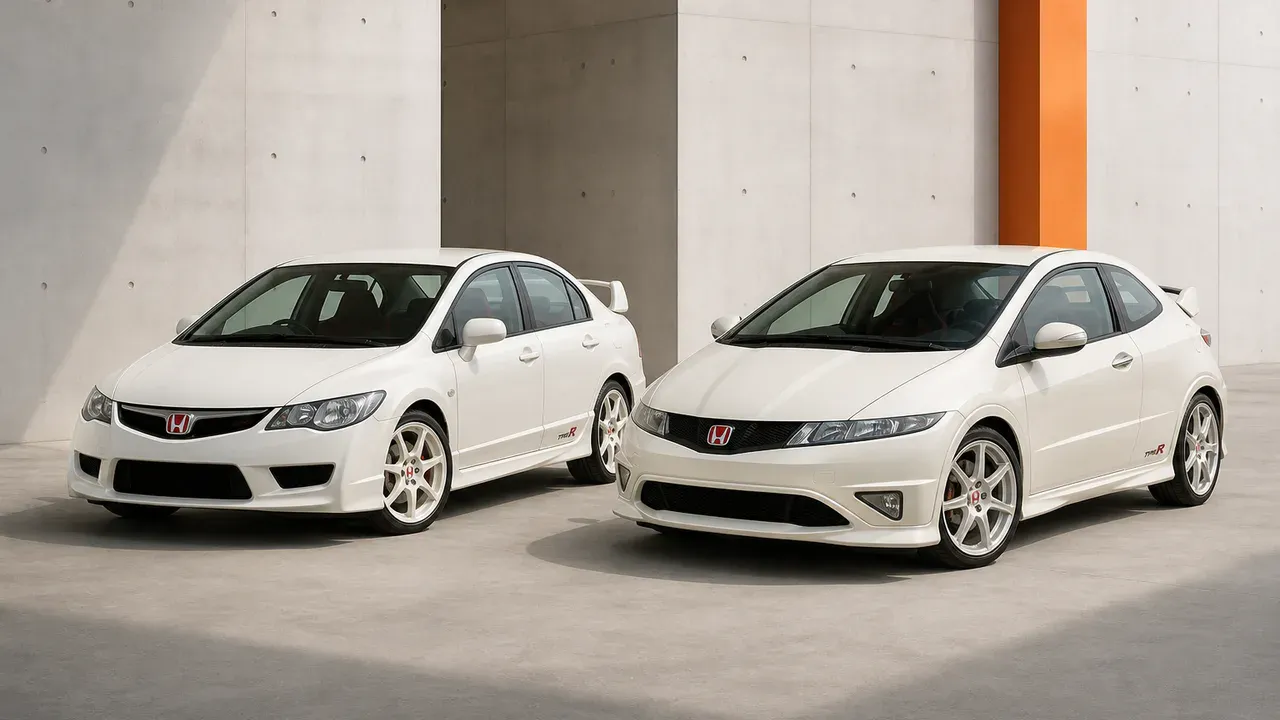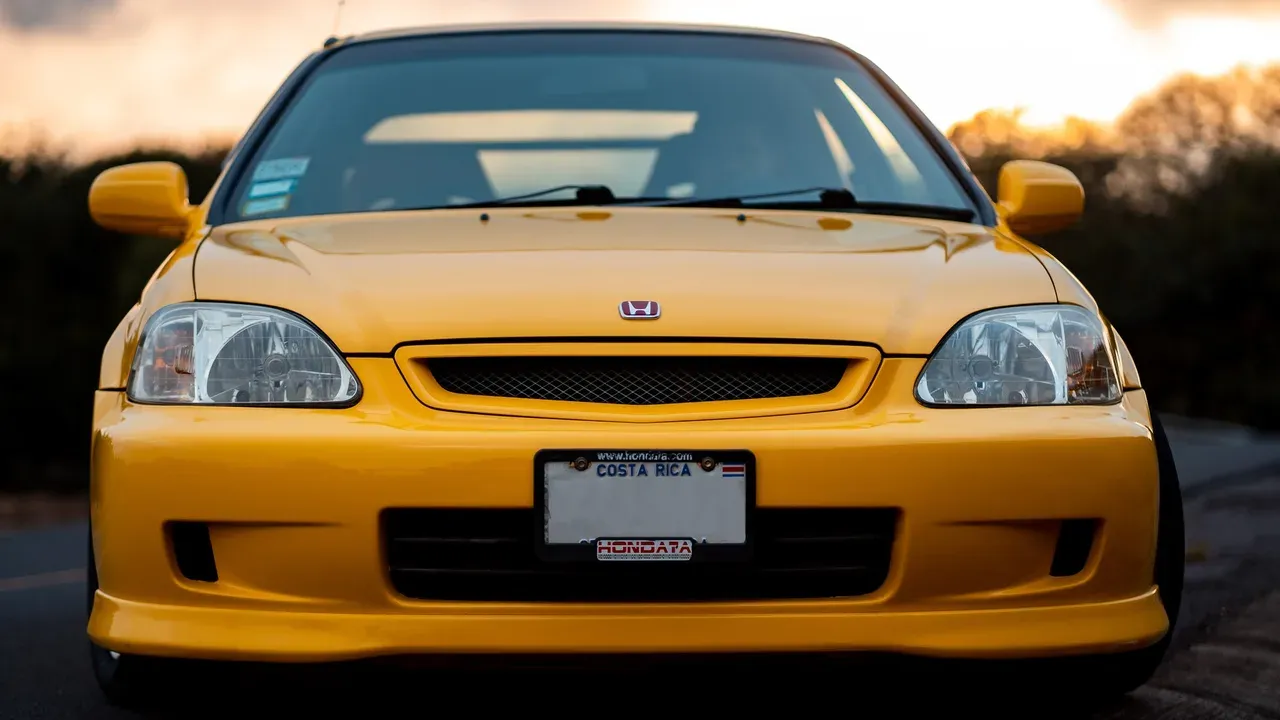
The different generations of the Honda Civic Type R are regarded as some of the best performance cars to ever come out of the land of the rising sun. They have defined Honda as a company and some of them are starting to became classics.
This Honda Civic Type R buying guide will give you all the information you need to know about purchasing every generation of the Type R. We will be continually updating this article with fresh information and will add any future Type R generations as well.
How to Use This Type R Buyer’s Guide
This guide is broken up into a number of different sections. To start with we will be looking at the entire history of the Type R Civic and then we will dive into the buyer’s guide section of the article. Each generation is broken up into a different section, so use the table of contents below to skip to the Type R model you are thinking of buying.
At the end of this article we will be looking at more general car buying advice and how to import one from Japan.
History of the Honda Civic Type R
EK9 Honda Civic Type R (1997 – 2000)
Honda’s Type R name was reserved for the company’s special performance models and it first appeared on the NSX Type R in 1992. The EK9 Civic was the third car to be given the Type R badge after the NSX and the Integrale Type R DC2.
Honda introduced the EK9 Civic Type R in 1997 and it shared many characteristics with the Integra Type R. The car was put on a serious diet and anything unnecessary, such the sound deadening was removed.
Power was produced by a 1.6-litre hand ported B16B engine that boasted one of the highest power outputs per litre of all time for a naturally aspirated engine. With 182 horsepower at 8,200 rpm and 118 lb ft at 7,500 rpm, the EK9 Civic Type R was no slouch and could go from 0-100 km/h (62 mph) in as little as 6.7 seconds.
Along with the hand ported engine, Honda also fitted a front helical limited-slip differential and a close-ratio 5-speed manual transmission. To improve chassis rigidity, Honda’s engineers strategically seam welded the monocoque chassis, a first at the time. Cornering performance was also improved with the use of upgraded sway and strut bars.
On the inside, the EK9 Type R was given a red themed interior, with red Recaro bucket seats, red door cards, and red Type R floor mats. To top it off, Honda fitted the Type R with a titanium shift knob and a Momo leather-wrapped steering wheel.
In 1998, Honda launched the Civic Type R Motor Sports Edition. This car came with steel wheels, no power windows or steering, no air conditioning, no radio and the same red Type R interior.
The Type Rx Civic was fitted with a CD player, auto air condition, body coloured retractable electric door mirrors, power windows, aluminium sports pedals, a keyless entry system, and a carbon centre panel.
In 1999. Honda tuning company Spoon Sports produced a N1 racing version of the Type R Civic that featured a B16B engine with a redline of 11,000 rpm.
EP3 Honda Civic Type R (2001 – 2005)
Also known as the Mk2, the EP3 Honda Civic Type R was launched in 2001 and was based on the 3-door hatchback. While the original Type R Civic was manufactured in Japan, this model was produced in Swindon, England and featured a 197 horsepower K20 2.0-litre i-VTEC engine.
The European EP3 continued the trend of a seam welded chassis and a close ratio transmission, which was now up to six gears from the previous generation’s five. It also featured upgraded brakes over the standard car, but was missing some of the features of the JDM EP3 such as the helical limited-slip differential and red Recaro bucket seats.
Honda manufactured the JDM spec EP3 in the same factory in Swindon and then shipped them to Japan for sale. The JDM EP3 Type R retained the highly renowned helical limited-slip diff from the EK9 and the red Recaro seats.
Japanese EP3 cars also featured a more track-orientated chassis and a more powerful 212 horsepower version of the i-VTEC engine. The JDM car’s VTEC engine had a fully balanced crankshaft assembly with a higher-lift camshaft, a different exhaust manifold, higher-compression pistons, an updated ECU and a chrome-moly flywheel.
All of the engines for the Japanese spec Type R were produced in Japan and then shipped to Swindon to be installed. Japanese models were available in ‘Championship White’, the Type R’s traditional colour. European models were not available in this colour.
The EDM version of the Type R featured more relaxed gear ratios and high rpm torque was traded for lower rpm torque. Thanks to its more powerful engine, the JDM model could hit 100 km/h (62 mph) in 6.2 seconds, while European models had to settle for 6.4 seconds.
Honda updated the EP3 in 2003 with a number of improvements such as revised suspension settings, quicker steering, projector headlamps (JDM came with halogens, while EDM models came with the option of HIDs with self-levelling motors), and a lighter clutch and flywheel assembly.
The revised suspension and steering setup was aimed at addressing complaints about the Type R’s numb steering response and understeer at the limit.
Civic Type R 30th Anniversary
To celebrate 30 years of the Civic, Honda launched a special 30th Anniversary edition of the Type R in 2003. This special edition Type R Civic features red Recaro bucket seats, air conditioning, a leather Momo steering wheel, red interior trim, and privacy glass on the rear windows. Only 300 of these models were produced with 100 being available in each colour (Nighthawk Black, Satin Silver, and Milano Red).
Civic Type R Premier Edition
At the end of the EP3’s production run, Honda created the Premier Edition, which featured red and black Recaro seats, a Momo steering wheel, a darker shade of fabric on the rear seat centre sections, red interior trim, privacy glass on the rear windows, and “Type R” embossed onto the front brake calipers. These were available in Nighthawk Black, Satin Silver, Milano Red and Cosmic Grey.
Civic Type R C Package
Honda launched the “C Package” option for JDM Type R Civics in 2004. These cars were available in an additional colour, Satin Silver Metallic, and also featured HID lighting, privacy glass on the rear windows, automatic air conditioning and an outside air temperature sensor.
FD2/FN2 Honda Civic Type R (2007 – 2012)
Based on the eighth generation Civic, the third gen Type R was once again offered in two distinct models: one for the Japanese Domestic Market and one for the UK/International markets.
The Japanese version of the Civic Type R (FD2) went on sale on March 30 2007. For the first time ever the Civic Type R was available as a four-door saloon rather than a four-door hatchback.
Compared to the previous generation, the FD2 was wider, bigger and heavier with a wheel base of 2,700 mm (2,570 mm for the EP3). This increase in size meant that the FD2 was much more stable during high speed cornering than the EP3 Type R.
European and International Type R Civic models (FN2) were only available as a three-door hatchback and they used a different chassis and internal layout.
The FD2’s 2.0-litre K20A engine produced 222 horsepower at 8,000 rpm and 159 lb ft of torque at 6,100 rpm. European, FN2 models featured a 2.0-litre K20Z4 engine that produced 198 horsepower and 142 lb ft of torque at 5,600 rpm. Honda actually borrowed the FD2/FN2’s engine from the Accord Euro R and implemented new technology such as a drive-by-wire throttle.
Power was sent to the front wheels of the third gen Type R through a close-ratio six-speed manual transmission, and a helical limited-slip differential was fitted as standard.
Honda gave the third gen Type R 320 mm disc brakes with four piston Brembo calipers at the front, and 225/40 R18 Potenza RE070 tyres. European models were fitted with 225/40 R18 Y88 Bridgestone Potenza RE050A tyres as standard, and buyers had the option of upgrading to 19-inch Rage alloys fitted with Yokohama Advan Sport 225/35 ZR19 88Y tyres.
Compared to the DC5 Integra Type R, Honda claimed that this Civic featured a chassis that was 25% more rigid, which improved cornering performance. The FD2 utilised an independent rear suspension set up, rather than the torsion beam configuration that was used on the FN2.
To save weight, Honda decided to use aluminium bonding with adhesive instead of more traditional welding. This meant, that while the chassis was more rigid and larger than the JDM Integra Type R, it was only 70 kg heavier in weight.
On the inside, the iconic Recaro seats were replaced by Honda designed ones. Additionally, the Momo steering wheel was also replaced for a Honda developed one. Buyers either had the option of a red and black interior or a black and black one.
Honda offered the third gen Civic Type R in a variety of paintjobs - Championship White, Super Platinum Metallic Silver, Vivid Blue Pearl (dropped from October 2008). From October 2008, the Type R was available in the following additional colours; Premium White Pearl, Premium Deep Violet Pearl and Crystal Black Pearl.
Fifth Gear discovered that the JDM Type R FD2 was around 3 seconds a lap quicker than the EDM FN2 model around Castle Combe in the United Kingdom. Additionally, it was found during other tests that the FD2 Type R was on average four seconds a lap quicker than the Integrale Type R DC5 at the Suzuka Circuit in Japan.
FN2 Trim Levels
Type R GT
- Features the following:
- Dual zone climate control
- Rain sensing windscreen wipers
- refrigerated glove box
- automatic headlights with dusk sensors
- front fog lights
- power folding wing mirrors
- cruise control
- front and rear curtain airbags
Type R Heritage
Heritage trim replaced the GT in some markets and was fitted with many of the same features. It was also fitted with the following:
- Xenon/HID lights
- Bluetooth telephone system
- voice recognition DVD satellite navigation
Type R Race
More radical car that was 40 kg lighter did not feature the following:
- HID
- Air conditioning
- Fog lights
- Audio system
- Sound proofing
- Some air bags
Type R (Aust)
Much the same as the Type R GT. Models from 1 March 2010 were fitted with a limited-slip differential.
Civic Mugen RR
Mugen produced 300 special edition RR versions of the Type R Civic that were available exclusively in Milano Red. The Civic Mugen RR was only available in the Japan and the car received a number of updates/modifications over the standard Type R.
Power was increased to 237 horsepower at 8,000 rpm and 218 lb-ft at 7.000 rpm of torque via the use of Mugen parts such as a new exhaust system, camshafts, and ECU. Around 5 kg (Mugen RR weighed 1,255 kg) was saved through the use of carbon fibre bumpers and an aluminium bonnet.
Other features on the RR included Recaro SP-X racing bucket seats and other Mugen items on the interior, and special 18 inch Mugen 7-spoke wheels
The following year, at the 2008 Tokyo Motor Show, Mugen revealed the Civic Type RR Experimental Spec Concept car. This was fitted with a larger 2,157 cc K20A engine that produced 256 horsepower at 8,250 rpm and 237 lb-ft of torque. Weight was reduced even more and there was a new titanium exhaust system. More carbon fibre was used on the inside of the car and it also feature’s Mugen’s Intelligent-Tire Condition Monitoring System (i-TCMS).
An updated version of this concept Type R was unveiled at the Tokyo Motor Show the next year and was heavily based on the face-lifted FD2. It featured larger brakes and a weight of 1,095 kg.
FK2 Honda Civic Type R (2015 – 2017)
While there were rumours about a fourth generation Civic Type R as early as 2012, the car did not make an appearance until March 2014 at the Geneva Motor Show and would not be unveiled in full until the same show one year later. The FK2 was based on the ninth generation Civic platform and was the first factory turbocharged Civic Type R.
Honda fitted the FK2 Civic Type R with a 2.0-litre K20C1 turbocharged inline-four engine that featured Earth Dreams Technology. This new 306 horsepower engine was significantly more powerful than the one fitted to the third gen Civic Type R and Honda claimed that the car was good for 0-100 km/h (62 mph) in as little as 5.7 seconds. Honda manufactured the engine at Honda’s Anna Engine Plant in Ohio before exporting it to the UK.
The powerful new engine was mated to a 6-speed manual transmission with a factory equipped plate-style limited-slip differential.
Honda fitted larger brakes with 351 mm ventilated and drilled discs at the front and 305 mm solid discs at the rear to improve braking performance. Anti-lock brakes, electronic brake-force distribution, hill start assist, and vehicle stability assist were standard on the FK2 Type R.
Available Colours for the FK2
- Championship White
- Crystal Black Pearl
- Milano Red
- Brilliant Sporty Blue Metallic
- Polished Metal Metallic
Mugen Type R Concept
Mugen once again developed a special edition version of the Type R Civic for the fourth generation. While the Mugen RR went into production, the fourth generation Mugen Type R was simply a concept.
The Mugen Type R concept was essentially an aerodynamic package for the standard Type R. it featured an adjustable front lip spoiler, side skirts, a rear diffuser and a GT style fixed rear wing. All these parts were manufactured from carbon fibre and a carbon bonnet was also included as an option.
Mugen made no changes to the drivetrain of the car, but fitted a new single exhaust system that replaced the quad one.
Black Edition Type R
The Black Edition marked the end of the FK2 Civic Type R’s production run. It was based on the GT Trim of the Type R and featured black exterior paint with red accents, a black interior with red stitching and red brake calipers. Only 100 of these cars were produced.
FK8 Honda Civic Type R (2017 – Present)
The fifth generation of the Civic Type first made its appearance at the 2016 Paris Motor Show, but the full production version wasn’t unveiled until the 2017 Geneva Motor Show. The car launched later that year and built on Honda’s heritage of developing high-performance hatchbacks.
The FK8 Civic Type R features the same turbocharged engine as the previous generation but with 316 horsepower in European and Japanese markets (Some markets were the same at 306 horsepower). Despite the power increase, the 0-100 km/h (62 mph) time was roughly the same as the FK2’s at around 5.8 seconds.
Honda mated the 2.0-litre turbocharged engine to a close ratio 6-speed manual transmission and a limited-slip differential was fitted as standard.
Honda based the design of the FK8 Type R on the tenth gen Civic hatchback. It features a winged carbon fibre splitter, with diamond-mesh air intakes and go-faster red accent lines. The bonnet was given an intake that helps to cool the turbocharged engine underneath.
To accommodate the larger 245/30 R20 tyres, Honda increased the size of the wheel arches and fitted new carbon fibre side skirts. At the back, a new carbon fibre diffuser was fitted and three tailpipes finished off the car’s sporty appearance.
The FK8 was given a number of safety features over the previous generation Type R models. These features include the following
- Automatic emergency braking
- Traffic sign recognition
- Lane departure warning
- Automatic high beam assistance
- Reversing camera
GT Trim Type R
- The GT Trim features the following:
- Parking sensors
- Blindspot monitoring
- Cross traffic alert
- Dual-zone climate control
- Power folding door mirrors
- Infotainment upgrades (wireless phone charging, etc.)
- 11-speaker stereo system.
Awards
The FK8 Civic Type R set the front-wheel drive lap speed record at the Nürburgring with a time of 7:43.80, seven seconds faster than the FN2. Additionally, the fifth generation Type R has won many awards and accolades such as Top Gear Magazine’s Hot Hatch of the Year for 2017 and International Editor’s Choice and overall Car of the Year 2017.
Honda Civic Type R Specifications
Model | EK9 | EP3 JDM/EDM | FD2/FN2 | FK2 | FK8 |
Year of production | 1997 - 2000 | 2001 - 2005 | 2007 - 2012 | 2015 - 2017 | 2017 - Present |
Layout | Front-engined, front-wheel drive | Front-engined, front-wheel drive | Front-engined, front-wheel drive | Front-engined, front-wheel drive | Front-engined, front-wheel drive |
Engine | Inline-4, B16B | Inline-4, K20A (JDM)/ K20A2 (EDM) | Inline-4, K20A (FD2)/ K20Z4 (FN2) | Inline-4, K20C1, Turbo | Inline-4, K20C1, Turbo |
Capacity | 1595 cc | 1998 cc | 1998 cc | 1996 cc | 1996 cc |
Power (hp) | 182 | 212 (JDM)/ 197 (EDM) | 222 (FD2) / 198 (FN2) | 306 | 316 (Europe, Japan) 306 (Other markets) |
Torque (lb ft) | 118 | 144 | 159 (FD2) / 142 (FN2) | 295 | 295 |
Gearbox | 5-speed manual | 6-speed manual | 6-speed manual | 6-speed manual | 6-speed manual |
Tyres | 195/55/R15 | 205/45/R17 | 225/40/R18 | 235/35/R19 | 245/30/R20 |
Weight | 1073 kg (2366 lbs) | 1204 kg | 1270 kg (FD2) / 1,370 kg (FN2) | 1382 kg | 1380 – 1436 kg |
Top speed | 235 km/h (146 mph) | 244.6 km/h (152 mph) | 257 km/h (160 mph) | 270 km/h (168 mph) | 272 km/h (169 mph) |
0 – 100 km/h (62 mph) | 6.8 seconds | 6.2 seconds (JDM) 6.4 seconds (EDM) | 5.9 seconds (FD2) / 6.7 seconds (FN2) | 5.7 seconds | 5.7 seconds |
Buying a Honda Civic Type R
Now that we have covered the history and specifications of the different Civic Type R generations, let’s take a look at buying one. This section of the article will be focusing on specific problems and things to watch out for on each model. It is broken up into each different generation of the Type R. We will also have more general car inspection advice after we cover each generation.
Always try to inspect any second hand Civic Type R yourself or find a third party that can do so for you. Honda’s are known to be reliable, but they can go wrong, so try to always physically inspect any vehicle before purchasing it.
When organising an inspection of a Civic Type R, make sure you try to view the car in the morning when the engine is cold. Warm engines can hide a number of different problems, so don’t let the owner/seller pre-heat the vehicle before you arrive.
Try to avoid inspecting any Type R when they are wet. Water can hide a load of issues with the bodywork or paint, which can be expensive to fix.
At the end of the buyer’s guide we have information on how to get the best deal on a Civic Type R, where to buy one, and how to import one from Japan. Carry on reading below:
Honda Civic Type R EK9 Buying Guide
While the first generation Civic Type R is getting on a bit, it is still an excellent vehicle and is fast becoming a classic. These cars were only sold in Japan, so every one of them you see in your local market will have been imported (unless you live in Japan of course).
Vin Location
We always recommend that you check the VIN (Vehicle Identification Number) of an EK9. The VIN on an EK9 Type R should look something like this: EK9-#######.
Condition
Around 16,000 EK9 Civic Type Rs were produced and a fair few are in poor condition, so it is important to inspect any one you are thinking of buying thoroughly. Still, they are a reliable car and if they are looked after properly they should provide many more years of motoring enjoyment.
Engine
To start your inspection, open the bonnet and take a good look at the engine bay – do you see any signs of trouble? Is it clean and well maintained?
Once you have done this, check all the fluid levels to see if they are at the correct height. Incorrect fluid levels can lead to a whole host of problems and are a sign of a poorly maintained vehicle.
The engine oil and oil filter should be changed regularly. Old oil that sits at the bottom of an EK9’s crankcase can breakdown and become diluted in the presence of contaminates such as dirt and gas, leading to premature engine wear. Below we have listed when they should be replaced.
Engine oil – Honda states that oil should be changed every 10,000 km (6,000 miles), but many owners like to do it every 5,000 km (3,000 miles) or every six months to a year. Replace with good quality synthetic or semi synthetic 10W-30, 15W-40 or 10W-40 oil will work (30 better in cold climates, 40 better in warm). Tuning company Spoon recommends 10W-30 in most circumstances. Something like Royal Purple’s engine oil should do the trick.
Oil filter – The filter should be changed every 10,000 km (6,000 miles), but some enthusiastic owners will change it every 5,000 km (3,000 miles) with their engine oil change. The original oil filter has the part number H15400RBAF01. Hamp or OEM oil filters are the most recommended (other brands can work as well).
Any contaminates or metallic particles in the oil should make you walk away. Black oil is okay and just indicates it may be time for an oil change. Oil that smells like fuel or coolant could indicate that the piston rings are worn or the head gasket is failing.
At around 40,000 km (24,000 miles) the air filter and fuel filter should be replaced. Part numbers 17220p2ne01 and 16010st5e02 respectively. Coolant should be changed every 78,000 km (48,000 miles) or so.
Burning Oil
EK9s can burn a bit of oil if the wrong type is used, so watch out for that. Some find that something like 10W-40 oil can help fix the problem. Burning oil and smoke can be a sign of other more serious issues with the vehicle.
Cambelt
Make sure that the cambelt/timing belt has been changed every 100,000 km (60,000 miles) or 5 years on EK9s. It is a good sign if it has been changed sooner as it shows that the owner cares for the vehicle. If you are unsure when it was last replaced, get the work done immediately if you buy the car. The following should also be changed/worked on along with the cambelt on an EK9 Type R:
- Spark plugs – NGK PFR7G-11 or DENSO PK22PR-L11
- air-con A/C belt
- Power steering belt
- Valve clearance
- Waterpump
If this work has not been carried out, either move onto another EK9 or try to get a discount on the vehicle and get the work done yourself.
Exhaust System of an EK9
Inspect as much of the exhaust system on an EK9 as possible, checking for any leaks, corrosion or repairs. Black sooty stains indicate a leak. Excess corrosion on the weld points of the exhaust system is a major problem that needs to be fixed. Remember to check for any cracks or dodgy repairs along the exhaust or exhaust manifold.
Aftermarket exhaust systems are available, but they can lower the value of the car (especially now that the EK9 is starting to become a classic). Make sure that any aftermarket exhaust has been installed correctly.
Oil Leaks on EK9 Type R Civics
As the EK9 is getting a bit older expect to see some very minor oil leaks on some of the cars you inspect. If you notice a large oil leak or there is a big pool of oil underneath the car, you should probably walk away. Make sure you check for any oil leaks both before and after a test drive of an EK9 Civic Type R.
Starting Up and Driving a Honda Civic Type R EK9
Always get the owner to start a vehicle for you as it will give you an indication how they treat it. If they thrash the car when it is cold, you know to walk away. Additionally, if you get the owner to start the vehicle you will be able to see if any smoke comes out the back when the engine starts.
When the owner turns the key in the ignition, the car should start immediately. Listen out for any strange noises or signs that the vehicle is struggling to start. If the EK9 you are looking at struggles to start or runs rough, there is a problem. Any bangs or load knocks should make you walk away from an EK9. If the temperature is cold outside, the car may run rougher, but should smoothen up.
Metallic whining sounds can be a sign of a failing power steering pump or oil pump. Additionally, squeals from the cambelt area may indicate that a belt is worn (cambelt itself, alternator, etc.). Chugging or misfiring may be caused by low compression or worn injectors.
VTEC Engagement
Make sure that the VTEC system engages properly when you test drive an EK9 Civic Type R. Once the car is up to temperature, accelerate both hard and slow to test this. If VTEC does not engage it could be caused by anything from incorrect oil pressure to coolant temperature issues and more.
Smoke and Engine Vapour from an EK9
Remember to check for any smoke or vapour from the exhaust when the car starts and while it is running. Vapour caused by condensation is perfectly fine as long as it disappears. Excessive amounts of smoke or vapour should make you walk away from an EK9 Type R. We have outlined what the different smoke colours mean below:
White smoke – Is usually caused by water that has made its way into the cylinders and could be a sign of a blown head gasket. If the smoke smells sweet, it is almost certainly coolant.
Blue smoke – Is usually caused by wear to the pistons, piston rings, and/or worn valve seals. To check for blue smoke, get a friend to follow you as you drive the car or get the owner/seller to take the car through the rev range. Blue smoke on start-up and overrun is a sign that the car has been thrashed.
Black smoke – Usually occurs when the engine is running too rich (burning too much fuel). The first things you should check is the air-filter and other intake components.
Overheating and Blown Head Gaskets
If you are driving an EK9 Type R and it overheats or begins to overheat, you should look elsewhere. Overheating can be a massive issue and can lead to enormous expense down the line. We have listed some signs of a blown head gasket below, if you think that is the problem:
- External Coolant leak from below the exhaust manifold
- White smoke from the exhaust pipe (especially if you see lots of it)
- Bubbles in the radiator or coolant overflow tank
- Overheating engine
- Milky white oil
- Fouled spark plugs
- Low cooling system integrity
- Engine oil that smells of coolant
- Sweet smell from the exhaust
Transmission
The EK9 Civic Type R encourages you to drive fast, so the 5-speed manual transmission on these cars can take a bit of a beating. Check the service records to make sure the gearbox oil has been changed at least every 78,000 km (48,000 miles). Some owners like to change it even more frequently, which is not a bad thing. The EK9’s transmission takes around 2.2 litres of Honda MTF (you should see it flowing out when the transmission is full).
While test driving an EK9 Type R, shift through all the gears at both low and high engine speeds, listening out for any strange noises such as grinding or whining – there should be none. Whining or howling noises may be a sign that the incorrect transmission oil has been used or the bearings are damaged from continuous high rpm shifting.
The transmission may be a bit tight when cold, but should loosen up as it warms up. Synchro wear can be a problem, especially on third gear. If the car does have synchro wear, it is a good indication that the vehicle has been thrashed.
Clutch
Check the clutch to make sure it works correctly. We have outlined the processes below:
Clutch Engagement – Put the EK9 into gear on a level surface and slowly let the clutch out. It should engage around 7 to 10 cm (2.5 to 4 inches) from the floor. If it engages immediately or near the end of the pedal’s travel, there is a problem.
Clutch Slippage – Shift into a gear that is too high for the speed you are going and then plant your foot on the throttle. If the engine speed jumps but there is no acceleration the clutch is slipping. Clutch slippage can be caused by the following:
- Worn clutch
- Clutch covered in oil
- Clutch cable is too tight and is not releasing properly
Clutch Drag - Put the EK9 on a level surface with the clutch pedal pressed to the floor (when you are stationary) and rev the car hard. If the vehicle moves then the clutch is not disengaging when you shift and parts will wear prematurely.
Juddering or a stiff pedal can also be a sign that the clutch needs replacing. The life of a clutch will depend on how it has been treated and how the car has been driven. They can last a long time or wear quickly if the vehicle is thrashed a lot.
Body and Exterior
The body and exterior of an EK9 is probably going to be the biggest cause for concern. There are two main things to watch out for.
Rust
Rust can be a major problem, especially on EK9’s that have been stored outside, have lived by the sea or live in countries that salt their roads. If you find significant amounts of rust you should move onto another EK9. The most common places to find rust are as follows:
- Rear wheel arches
- Sills
- Underbody
- Around the windscreen
Remember to check for any signs that rust has been repaired in the past. Look for any inconsistencies in the paint or areas where the car may have been resprayed. Check the service history and any other paperwork to see if rust has been repaired. Ask the owner about rust, but remember they may try to hide problems from you!
Use a magnet on steel sections of the car or a coating gauge thickness tool such as this one to find any areas that may have been repaired.
Accident Damage on EK9 Civic Type Rs
A good number of EK9s have been in accidents, so check to make sure the car you are inspecting is straight. Owners/sellers may lie about the severity of an accident, so don’t always trust their word.
When looking for accident damage, pay particular attention to the panel gaps of the car. Additionally, make sure everything opens and closes properly, and look out for any paint inconsistencies or damaged parts. We have more information on crash damage in the ‘general car buying advice’ section of this article that relates to all the models we have covered in this article.
Suspension and Steering
Take a good look at all the suspension and steering components of the EK9 you are inspecting – do they look in good condition, or are they worn, damaged or corroded? Damaged suspension and steering components can be expensive to repair/replace, so make sure they are in good condition!
Additionally, if the EK9 features aftermarket suspension components make sure they have been installed correctly and see if the owner still has the originals. Aftermarket suspension components can also ruin the handling characteristics of an EK9 Type R, so it is important to check this during a test drive. If the aftermarket parts are from a poor brand, move onto another EK9.
Worn suspension components will ruin the handling of an EK9 Type R. Below we have listed some things to check or keep an eye out for when inspecting a vehicle’s suspension.
- Dipping and swerving when the brakes are applied
- Excessive Rear-end squat during acceleration
- Tipping during turns
- Instability at high speeds
- Excessive vibration coming through the steering wheel
- Delayed or longer stopping distances
- Uneven tyre wear
- Excessive tyre bounce after hitting a bump
- Leaking fluid on the exterior of the shock/strut
If the EK9 Type R you are looking at does not drive straight without you correcting the wheel, the wheel alignment is probably out, or it may have been in an accident. Check with owner/seller to see when the wheel alignment was last done.
Remember to check the CV joints. Physically inspect the boots to see if they are torn and check the joints for any leaks. While test driving an EK9, drive in a figure of 8 and listen for any strange knocking or clicking sounds coming from the CV joints.
Brakes
While you are inspecting the bodywork and suspension component, take a good look at the brakes – do the pads still have life left in them? Are the discs pitted/scored or do they have any grooves in them? Are the brakes corroded at all?
We also recommend checking the brake lines for any leaks. If it is possible, get a helper to press on the brake pedal while you inspect the brake lines.
During a Test Drive
While test driving an EK9 Type R, make sure you test the brakes both under hard and light braking situations. If the car pulls to one side or you hear any strange noises, there is a problem. Additionally, if the pedal feels bad or the car does not stop properly, the brakes will need some attention.
A car that pulls to one side during braking could have a sticking/seized caliper or several other issues. Seized brakes can occur when a vehicle has been left standing for a period of time. If a brake caliper has seized, you may notice a load thud when you pull away for the first time.
A judder through the steering wheel under braking may be an indication that the discs are warped and need replacing. This will probably first become apparent under high speed braking.
Aftermarket brakes
You may come across an EK9 Type R with aftermarket brakes. This is perfectly fine, just make sure they are from a good brand such as Brembo. For everyday use, the OEM brakes are more than good enough.
Wheels and Tyres
Check the wheels to see if they are curbed or damaged, and if they are aftermarket ones check with the owner to see if they still have the originals. Additionally, take a good look at the tyres and check for the following:
- Enough tread
- Uneven wear (Can be a sign of alignment or suspension issues)
- Brand (make sure it is a good one)
EK9 Type Rs were fitted with 195/55/R15 tyres.
Interior and Electronics
Take a good look at the seats and interior trim pieces on an EK9 Type R. Look out for any rips, stains or material fade. Additionally, check to see if the seats slide on the runners correctly and make sure they don’t move under braking or during acceleration.
Remember to check the steering wheel, gear shifter, pedal and carpets/mats for wear as they can indicate how far an EK9 has travelled. If they look overly worn for the miles the car has done, the vehicle’s odometer may have been wound back.
During a test drive and inspection of an EK9 Type R, make sure all the buttons, switches and toggles work correctly. Check the dashboard for any warning lights. If there are none during start up the car may have an issue, or the owner may have disconnected them to hide an issue.
Aftermarket components need to be inspected closely to make sure they work and are installed correctly. Poor workmanship here can be a sign of a careless owner.
Civic Type R EK9 Buyer’s Guide Summary
The EK9 is a reliable performance car and a good one should give you plenty more years of motoring enjoyment. They are becoming more difficult to find, but if you take your time you should be able to find a good one.
We have included more general car buying information at the end of this article and we have also included some information on how to import a Type R from Japan as well.
Honda Civic Type R EP3 Buying Guide
The second-generation Civic Type R is one of the best hot hatches of the period and there are still quite a few good examples out there. Below we have included everything you need to know about buying one.
Vin Location
It is important to check the VIN (Vehicle Identification Number) of an EP3 Type R as this can give you a lot of information on the vehicle. The VIN on an EP3 should look something like this: EP3-#######.
Condition
The EP3 Type R is a fairly robust and reliable performance car, but they can cause trouble if they are not looked after properly. We have broken this buyer’s guide up into a number of sections that relate to different areas of an EP3.
Engine
To start your inspection of the engine, open the bonnet and have a good look at the engine bay – Does it look clean and well maintained, or do you see signs of trouble?
The next thing to do is to check that all the fluid levels are at the correct height. If they are not it is a sign of poor maintenance. Incorrect fluid levels will accelerate wear on the engine and other components of the car.
If the oil warning light is on due to low oil level, you should move onto another EP3. This is because damage may have already occurred.
Check to see if the oil and oil filter have been changed at the recommended service intervals or before. Old oil that sits at the bottom of an EP3’s crankcase will breakdown overtime and can become diluted in the presence of contaminates, leading to premature engine wear. Below we have listed the recommended service intervals for the oil and oil filter.
Engine oil – Honda states that oil should be changed every 20,000 km (12,500 miles) or every 12 months for normal conditions. Some enthusiastic owners like to do it every 10,000 km (6,000 miles) or every six months, but this is probably only recommended if the car is driven hard regularly. Somewhere in the middle, 14,000 km (9,000 miles), is probably a happy medium if you want to change it a bit sooner.
Replace with good quality synthetic 5W-30 or 5W-40 (30 better in cold climates, 40 better in warm and for hard/track use). Something like Royal Purple’s 5W-30 engine oil is a good option for EP3 Type Rs that are just used on the road. If the car burns a bit of oil on 5W-30, it may be a good idea to switch to 5W-40.
Oil filter – The filter should be changed every 20,000 km (12,500 miles), but some owners will change it earlier if they do an oil change at lower miles. Hamp or OEM oil filters are the most recommended filters for EP3 Type R Civics.
If you notice any contaminates or metallic particles in the oil you should move onto another EP3. Black oil is okay and just indicates that it is probably time for an oil change. If you notice that the oil smells of coolant, it could be a sign that the head gasket is failing/failed. Alternatively, oil that smells of fuel could indicate that the piston rings are worn.
Change the air filter every 48,000 km (30,000 miles) for normal condition uses and every 24,000 km (15,000 miles) for severe condition uses (hard driving, stop-start driving, etc.)
Burning Oil
If the EP3 Type R you are looking at burns a bit of oil, find out what oil the owner uses. If they use something like 5W-30, consider switching to 5W-40. Additionally, a car that burns oil can also have more serious issues, so be mindful of that when inspecting any EP3.
Timing Chain and 75K Service
The K20 engine used in the EP3 Type R Civic uses a timing chain instead of a belt, so you don’t need to worry about replacing it. If the owner states that the timing chain has been replaced it is probably because they are:
- Lying thinking it sounds better
- very cautious and they like preventative maintenance
- the car has something wrong with it (Timing chain has stretched, etc.)
- They don’t know what they are talking about
Some K20 engines have required new chains and chain tensioners on some EP3s. As they get towards 100,000 km they can sometimes start to become noisy and get slack, which can destroy the chain guides.
The service every 120,000 km (75,000 miles) or every 6 years is an important one, so make sure it has been done. All the following should have been done during the service:
- Oil
- Oil filter
- Air filter
- Pollen filter
- Fuel filter
- Spark Plugs (NGK Iridium)
- Gearbox oil
- Brake fluid
- Valve clearance Adjustment (check every 25,000 miles)
- Chain tensionor check/replace
Exhaust System of an EP3 Type R
Make sure you take a good look at the exhaust system of an EP3 Type R. While the exhaust system on these cars is fairly robust, you need to keep an eye out for any corrosion, leaks or repairs. Black sooty stains along the exhaust indicate a leak and watch out for any corrosion on the weld points of the system. If you notice any cracks or dodgy repairs along the exhaust or exhaust manifold, be very cautious of the vehicle.
You may come across an EP3 Type R with an aftermarket exhaust. A good aftermarket exhaust that has been installed correctly can increase performance, but they can reduce the value of the vehicle (for those looking for a collector’s item).
Oil Leaks on EP3 Type R Civics
These cars really shouldn’t leak much oil (if at all), so if you see a big puddle under the vehicle you should move onto another Type R. Remember to check for oil leaks both before and after a test drive.
Engine Mounts and Gearbox Mounts
The engine and gearbox mounts on EP3 Type Rs can fail if the car has been heavily abused or seen a lot of track time. To test for this problem, rock the engine to see if it moves more than it should.
Starting Up and Driving a Honda Civic Type R EP3
We suggest that you get the owner to start the vehicle for you. There are two reasons for this with the first being that if the owner thrashes the car when it is cold you know to walk away. The second reason is because you can see if any smoke comes out the back of the exhaust upon engine start up.
When the key is turned in the ignition, the car should start immediately. Keep an ear out for any strange noises or signs that the engine is struggling to start/run. If the EP3 Type R you are looking at runs rough, there is almost certainly an issue with the vehicle that may be major or minor. Move onto another EP3 if you hear any load bangs or knocks, the car won’t be worth your time. Remember that cold weather will make the car run a bit rougher than usual.
A loose heat shield or manifold cover can cause a rattling noise, but this is an easy fix and shouldn’t turn you off a vehicle.
VTEC Engagement
Make sure that the VTEC system engages properly when you test drive an EP3 Type R. Once the vehicle has warmed up, accelerate both hard and slow to test this. If VTEC does not engage it could be caused by anything from incorrect oil pressure to coolant temperature issues and more.
Noisy Tappets/Lifters
If the car you are looking at makes a tapping/ticking noise, the tappets may need to be adjusted. This should be part of the 75K service and is not a major problem.
Smoke and Engine Vapour from an EP3
Keep an eye out for any smoke or vapour coming from an EP3 Type R’s exhaust on start up and while the engine is running. Vapour is caused by condensation and a little bit of it is fine. If you notice excessive amounts of smoke or vapour, then you should move onto another Type R. Below we have listed what the different colours of smoke mean:
White smoke – Is usually caused by water that has made its way into the cylinders and could be a sign of a blown head gasket. If the smoke smells sweet, it is almost certainly coolant.
Blue smoke – Is usually caused by wear to the pistons, piston rings, and/or worn valve seals. To check for blue smoke, get a friend to follow you as you drive the car or get the owner/seller to take the car through the rev range. Blue smoke on start-up and overrun is a sign that the car has been thrashed.
Black smoke – Usually occurs when the engine is running too rich (burning too much fuel). The first things you should check is the air-filter and other intake components.
Overheating and Blown Head Gaskets
While test driving an EP3 Type R watch out for any signs of overheating. Overheating and head gasket issues were not major problems on these cars, so you should walk away if you find a car with them. Here are some things to watch out for:
- External Coolant leak from below the exhaust manifold
- White smoke from the exhaust pipe (especially if you see lots of it)
- Bubbles in the radiator or coolant overflow tank
- Overheating engine
- Milky white oil
- Fouled spark plugs
- Low cooling system integrity
- Engine oil that smells of coolant
- Sweet smell from the exhaust
Transmission
The EP3 Civic Type R featured a 6-speed manual transmission that replaced the 5-speed fitted to the previous generation model. Honda’s 6-speed transmission is fairly robust but can wear with repeated heavy abuse.
While you are driving an EP3 Type R, shift through all of the gears at both low and high engine speeds. Keep an ear out for any strange noises such as grinding or whining, and make sure the gearbox shifts smooth. Pay close attention to second gear, making sure that it engages smoothly and doesn’t jump out of gear under hard acceleration.
Check the service records to make sure the gearbox oil has been changed at least every 80 - 96,000 km (50 – 60,000 miles). Some owners change it more frequently, which is a good thing. The EP3’s gearbox takes 1.7 litres of Honda MTF (you should see it flowing out when the transmission is full).
You may find that the transmission is a bit tight when it is cold, but it should loosen up as the car warms up. Synchro wear and other transmission issues are a sign that the car may have been thrashed.
Clutch
We have outlined some process below that you should go through to check that the clutch is working properly.
Clutch Engagement – Put the vehicle into gear on a level surface and slowly let the clutch out. It should engage around 10 cm (4 inches) from the floor. If it engages immediately or near the end of the pedal’s travel, there is a problem.
Clutch Slippage – Shift into a gear that is too high for the speed you are going and then accelerate hard. If the engine speed jumps but there is no acceleration the clutch is slipping. Clutch slippage can be caused several different problems:
- Worn clutch
- Clutch covered in oil
- Clutch cable is too tight and is not releasing properly
Clutch Drag - Put the EP3 you are test driving on a level surface with the clutch pedal pressed to the floor (when you are stationary) and rev the car hard. If the vehicle moves then the clutch is not disengaging when you shift and parts will wear prematurely.
If you notice juddering or a stiff pedal, then the clutch probably needs to be replaced. Clutch life will depend on how the vehicle has been treated and whether it has been thrashed or not. If the clutch has been replaced recently and it is already worn, the car has probably been thrashed excessively.
Body and Exterior
Like the engine, the body and exterior of an EP3 Type R Civic is fairly robust. Here are the main issues you may encounter with them.
Rust
If you find rust on the body of an EP3 Type R the car has either had a very hard life or it has been repaired poorly after an accident. There are plenty of rust-free EP3s out there, so move onto another one if you find this issue during an inspection.
Rust is more likely to occur on cars that have been stored outside, those that have lived in countries that salt their roads, or those that have lived by the sea. Here are some of the most common places to find rust on an EP3 Civic Type R.
- Wheel arches
- Sills
- Hinges (boot, door, bonnet)
- Underbody
- Around the windows
- Around any suspected areas of accident damage
While keeping an eye out for rust, make sure you look for any signs of past rust repair. Inconsistencies in the paint may indicate a respray which could be caused by rust repair or accident damage. Remember to check the service history of the vehicle and also ask the owner about any rust issues, just don’t expect them to tell the truth!.
You can use a magnet on steel sections of the car or a coating gauge thickness tool such as this one to find any areas that may have succumbed to rust in the past.
Accident Damage on EP3s
The EP3 Civic Type R is a performance car and as such, more than a few of them have been in accidents. Always check for accident damage on any vehicle you are inspecting, no matter the mileage.
Ask the owner about any accident damage, but don’t always trust their word as many will lie to get a quick sale.
When looking for accident damage on an EP3 Type R, take a good look at the panel gaps on the car – are they consistent or misaligned? If they do not line up the vehicle may have been in an accident.
Additionally, make sure all the doors and windows open and close properly, and see if the bonnet opens smoothly. Another sign of accident damage is resprayed areas, so watch out for any inconsistencies in the paint. Rust can also be a sign of accident damage like we stated above.
Other Bodywork Issues
Milano red EP3s can suffer from paint fade if they have spent a lot of time outside. The only way to fix this is give them a respray. Additionally, the mouldings on the doors and window seals can deteriorate quickly, so check those.
Have a good look around the base of the aerial to make sure it is not letting water into the rear of the cabin. You can check for this by feeling around the headlining and B and C pillars inside the vehicle for any signs of dampness.
Suspension and Steering
Make sure you thoroughly inspect as many of the suspension and steering components as you can on an EP3 Type R. If they look worn, damaged or corroded they will need to be replaced at some point. Suspension components can be expensive to replace, so make sure you are in satisfactory condition.
If you come across an EP3 with aftermarket suspension, make sure it is from a good brand (Eibach, etc.) and is installed correctly. Aftermarket suspension can ruin the handling characteristics of an EP3 Type R, so check this during a test drive. If the car is setup for track use the ride will be harsh on the road, which is something you need to consider. Move onto another Type R if the car you are looking at has aftermarket suspension from a bad brand.
Worn suspension components will ruin the handling of an EP3 Type R. We have listed some things to watch out for below.
- Dipping and swerving when the brakes are applied
- Excessive Rear-end squat during acceleration
- Tipping during turns
- Instability at high speeds
- Excessive vibration coming through the steering wheel
- Delayed or longer stopping distances
- Uneven tyre wear
- Excessive tyre bounce after hitting a bump
- Leaking fluid on the exterior of the shock/strut
- A car that doesn’t sit level on its suspension (indicates worn bushes and ball joints)
If the EP3 Type R you are inspecting does not drive straight without you correcting the wheel, the wheel alignment is probably out. Additionally, a car that does not drive straight may have been in an accident, so watch out for that. Check with owner/seller to see when the wheel alignment was last done.
Don’t forget to inspect the CV joints for wear. Get down and take a look at the boots to see if they are torn and check the joints for any leaks. While test driving an EP3, drive in a figure of 8 and listen for any strange knocking or clicking sounds coming from the CV joints.
Steering Rack Recall
There was a problem with the steering rack on early EP3 Type Rs. The steering rack would fail to self-centre, so make it has been replaced (check service history, etc.). If it has not been replaced either move onto another Type R or get a heavy discount on the vehicle as they are expensive to replace.
Brakes
Take a good look at the brakes on an EP3 Type R – are they corroded? Do the pads still have life left in them? Are the discs in good condition or are they pitted/scored?
A lot of owners recommend Ferodo DS2500 pads for the EP3 Civic Type R.
Remember to also check the brake lines for any leaks. If possible, get a helper to apply some brake pressure while you inspect the brake lines. Some owners like to replace the original lines with aftermarket braided ones to improve pedal feel.
During a Test Drive
Abuse the brakes heavily on a test drive of an EP3 Type R. The brakes on these cars are good and should easily stop the vehicle. If they don’t there is a problem that needs to be attended to.
A judder through the steering wheel under braking could indicate that the discs are warped and need replacing. This usually becomes apparent under high speed braking, but can happen at other times as well.
If the EP3 you are driving pulls to one side under braking, the car may have a sticking/seized caliper or several other issues. A seized brake caliper can occur when a car has been left sitting for a period of time. If a caliper has seized, you may notice a load thud when you pull away for the first time.
Any strange load noises while braking should be investigated further as this can be a sign of a number of issues
Aftermarket brakes
Some owners have fitted aftermarket brakes to their EP3 Type R Civics. This is perfectly fine, just make sure they are from a good brand such as Brembo. The original discs and calipers are perfectly fine for everyday use, however, Ferodo DS2500 pads are recommended over the OEM ones.
Wheels and Tyres
Check the wheels to see if they are curbed or damaged, and if they are aftermarket ones check with the owner to see if they still have the originals. Additionally, take a good look at the tyres and check for the following:
- Enough tread
- Uneven wear (Can be a sign of alignment or suspension issues)
- Brand (make sure it is a good one)
EP3 Type Rs were fitted with 205/45/R17 tyres.
Interior and Electronics
Inspect the interior thoroughly for any wear and tear, or any dampness. Look out for any rips, stains or material fade on the seats and check that all the other trim pieces are in good condition. If the seats do not slide on the runners correctly or they move during acceleration or braking, they need to be fixed immediately.
Always check the steering wheel, gear shifter, pedals and carpet/mats for wear as they can indicate how far an EP3 has travelled. If they look too worn for the distance the car has travelled, the vehicle’s odometer may have been wound back.
While you are test driving an EP3 Type R Civic, make sure that all the electronics, switches, buttons and knobs work as intended. Also check the dashboard for any warning lights during start up and while the car is running. If no warning lights appear on the dash during start up the car may have a problem, or the owner may have disconnected them to hide a problem.
Aftermarket components should be inspected closely to make sure they work as intended. Any signs of poor workmanship such as bad wiring should be taken as a warning sign.
Useful Links for the EP3 Civic Type R
Honda Civic Type R FD2/FN2 Buying Guide
The third generation Honda Civic Type R is another great performance car and below you can find everything you need to know about buying one.
Vin Location
We always recommend that you check the VIN (Vehicle Identification Number) of any Type R as it can give you some useful information on the car. There are a few different places you may find the vin number including in the engine bay, on various parts of the chassis and more.
The different numbers and letters in the vin number mean different things. If it is a genuine Type R Civic you should notice FD2 or FN2 in the vin number depending on which model you are looking at.
Remember to do an HPI check to see the history of the vehicle.
Condition
Like the previous generations of the Type R, the third gen is a reliable car and a good one should provide many more years of motoring enjoyment.
Engine
Start your inspection of the engine by lifting the bonnet and taking a good look at the engine bay – do you see any major warning signs, or does it look well maintained? Does everything look stock or can you see some aftermarket components?
Once you have taken a good general look at the engine, move onto checking the level of the fluids. Incorrect fluid levels are a sign of poor maintenance and can lead to accelerated engine/component wear.
If the oil warning light is illuminated due to low oil level, move onto another FN2/FD2 as engine damage has probably already occurred.
It is important to check that both the oil and oil filter have been changed at the recommended service intervals or before. Old oil that sits at the bottom of an engine’s crankcase will breakdown overtime and can become diluted in the presence of contaminates, leading to premature engine wear. Below we have listed the recommended service intervals for the oil and oil filter for a FN2/FD2 Civic Type R.
Engine oil – Honda states that oil should be changed every 20,000 km (12,500 miles) or every 12 months for normal conditions. Some enthusiastic owners like to do it every 10,000 km (6,000 miles) or every six months, but this is probably only recommended if the car is driven hard regularly. Somewhere in the middle, 14,000 km (9,000 miles), is probably a happy medium if you want to change it a bit sooner.
Replace with good quality synthetic 5W-30 or 5W-40 (30 better in cold climates, 40 better in warm and for hard/track use). Fuchs Titan Pro S 5W-40 is a good option for FN2/FD2 Civic Type Rs**.** If the Type R you are looking at burns oil, find out what oil the owner runs the car on. If it is 5W-30, switch to 5W-40 if you purchase the vehicle. You may also come across some owners which run their FN2/FD2 Type Rs on 0W-30 or 0W-40 oil.
Oil filter – The filter should be changed every 20,000 km (12,500 miles), but some owners will do it with an early oil change. Hamp or OEM oil filters are the most recommended filters for EP3 Type R Civics.
Move onto another Type R Civic if you notice any metallic particles or contaminates in the oil. Additionally, oil that smells of coolant is a sign that the head gasket has failed or is failing. If the oil smells of fuel it may be caused by worn piston rings. Black oil is fine and just indicates it may be time for an oil change in the near future.
The air filter should be replaced every 40,000 km (25,000 miles). The stock one is perfectly fine, but you may find some owners have replaced the filters in their Type Rs with K&N or Spoon ones.
Timing Chain and 75K Service
The K20A and K20Z4 engines used in third generation Civic Type R use a timing chain instead of a belt. The timing chain should not need to be replaced, but here are some reasons it may have been.
- The owners is lying and thinks it sounds better.
- The owner is cautious and likes preventitive maintenance
- The timing chain has stretched or there may have been other issues
- They don’t know what they are talking about
The service every 120,000 km (75,000 miles) or every 6 years is very important, so make sure it has been done. If this work has not been carried out at the recommended intervals be very cautious of the vehicle. All the following should have been done during the service:
- Oil
- Oil filter
- Air filter
- Pollen filter
- Fuel filter
- Spark Plugs (NGK Iridium) (every 25,000 miels for standard plugs)
- Gearbox oil
- Brake fluid
- Valve clearance Adjustment (check every 25,000 miles)
- Chain tensionor check/replace
Exhaust System of an FN2/FD2 Type R
Always make sure you take a look at the exhaust system on a Type R for any leaks, corrosion or repairs. Black sooty stains indicate a leak and watch out for any corrosion on the weld points. If you find excessive amounts of rust on the exhaust system, either move onto another Type R or get a discount on the vehicle and get it replaced.
If you notice any cracks or dodgy repair jobs on the exhaust system, the car may not be worth your time.
Aftermarket exhausts from the likes of HKS and Toda can improve performance but can hurt the originality of the vehicle (if you care about that). If you are looking at an FN2/FD2 with an aftermarket exhaust make sure it has been installed properly and the workmanship is to a high standard.
Oil Leaks on Third Gen Type R Civics
Oil leaks can be caused by anything from a loose or bad oil filter to much more serious engine issues. We wouldn’t worry too much if you find a tiny oil leak, but if there is a big puddle under the vehicle then you should walk away. Remember to check for oil leaks both before and after a test drive.
Engine Mounts and Gearbox Mounts
Just like on EP3 Type Rs, the engine mounts on FN2 and FD2 Type Rs can fail if they are subjected to regular hard driving. If one or more of the mounts have failed you will probably hear a banging sound during gear changes, acceleration or under braking. The broken mounts need to be changed as soon as possible and you should use this as a bargaining point with the seller.
Starting Up and Driving a Third Gen Honda Civic Type R
We recommend that you get the owner/seller of the vehicle to start the Type R for you. The first reason for this is so that you can see if any smoke comes out of the exhaust upon start up. The second reason is if the owner thrashes the car when it is cold you know to move onto another Type R.
When the key is turned in the ignition, the vehicle should spring into life. Listen out for any strange noises such as banging or knocking and listen to the idle speed (it should be fairly consistent once the car has warmed up.
If the FD2/FN2 Type R you are inspecting runs rough, there is a problem that needs to be addressed. It could be anything from valve clearance issues to failing coil packs, overfilled engine oil and more. Additionally, remember that cold weather will make the Type R run a bit rougher than usual on start up.
A Type R that feels like it wants to stall all the time may have an issue with the idle control valve. A quick adjustment should be able to fix this and any local garage or specialist should be able to do this for you.
A rattling sound can be caused by a loose heat shield. It either needs to be tightened or removed completely.
VTEC Engagement
It is important to test that the VTEC system engages properly when you test drive an FD2 or FN2 Civic Type R. Once the vehicle has warmed up, accelerate both hard and slow to test this. If VTEC does not engage it could be caused by anything from incorrect oil pressure to coolant temperature issues and more.
Noisy Tappets/Lifters
A tapping/ticking noise that is more prevalent when the vehicle is cold is probably caused by the tappets/lifters. These get adjusted as part of the 75K service, so you shouldn’t worry too much about this issue.
Smoke and Engine Vapour from a Third Gen Type R
It is important to check for any smoke or vapour from an FN2/FD2 Type R’s exhaust on start-up and while the engine is running. A little bit of vapour is perfectly fine and is usually caused by condensation. If the Type R you are looking at produces excessive amounts of vapour or smoke you should walk away. Here are what the different colours of smoke mean.
White smoke – Is typically caused by water that has made its way into the cylinders and indicates a blown head gasket. If the smoke smells sweet, it is probably coolant.
Blue smoke – Can be caused by wear to the pistons, piston rings, and/or worn valve seals. To check for blue smoke, get a friend to follow you as you drive the car or get the owner/seller to take the car through the rev range. Blue smoke on start-up and overrun is a sign that the car has been thrashed.
Black smoke – Usually occurs when the engine is running too rich (burning too much fuel). The first things you should check is the air-filter and other intake components.
Overheating and Blown Head Gaskets
Third generation Type R Civics are not known to blow their head gaskets, but it can happen. If the FD2/FN2 Type R you are looking at is overheating or has a blown head gasket move onto another car. Below we have listed some things to watch out for:
- External Coolant leak from below the exhaust manifold
- White smoke from the exhaust pipe (especially if you see lots of it)
- Bubbles in the radiator or coolant overflow tank
- Overheating engine
- Milky white oil
- Fouled spark plugs
- Low cooling system integrity
- Engine oil that smells of coolant
- Sweet smell from the exhaust
Transmission
The 6-speed transmission fitted to third generation Civic Type Rs is fairly robust and reliable, but it can take a beating with repeated hard driving.
During a test drive, shift through all the gears on a third gen Type R at both low and high engine speeds. Listen out for any strange noises and make sure the transmission shifts smooth. It is important to check that the gearbox does not pop out of third gear, especially on early models. The reason for this is a worn synchro and many Type Rs had the problem fixed under warranty.
The transmission fluid should be changed every 120,000 km (75,000 miles) and is part of the 75K service. Some owners change the oil more frequently, which shows they care for the car. You will need a couple of litres of Honda MTF to change the gearbox oil on a FN2 or FD2 Type R (you should see it flowing out when the transmission is full).
You will probably find that the transmission is a bit tight when it is cold, but it should loosen up as the vehicle warms up. If the gearbox feels loose or sloppy, the shifter bushings probably need to be replaced. Synchro wear and other transmission issues may be a sign that the vehicle has been thrashed.
Clutch
Here are some processes to go through to make sure the clutch is working as intended on a third gen Type R.
Clutch Engagement – Put the car on a level surface and get it into gear. Slowly let the clutch out, feeling for engagement at around 10 cm (4 inches) from the floor. If it engages immediately or near the end of the pedal’s travel there is a problem.
Clutch Slippage – Change into a gear that is too high for the speed you are going and then accelerate hard. If the engine speed jumps but there is no acceleration the clutch is slipping. Clutch slippage can be caused a number of different issues:
- Worn clutch
- Clutch covered in oil
- Clutch cable is too tight and is not releasing properly
Clutch Drag - Put the Type R you are test driving on a level surface with the clutch pedal pressed to the floor (when you are stationary) and rev the car hard. If the vehicle moves then the clutch is not disengaging when you shift and parts will wear prematurely.
Juddering or a stiff pedal is a sign that the clutch needs to be replaced. The life of a clutch will depend on a number of factors including how the car has been driven (thrashed regularly, etc.). If the clutch on the Type R you are inspecting has only recently been replaced and has the problems listed above, the vehicle has probably been driven hard regularly.
Some cars third generation Type Rs had a squeaky clutch. Honda attempted to fix this with a recall, but the issue comes back. It’s not an issue and shouldn’t turn you off a Tyre R.
Body and Exterior
You shouldn’t find too many issues with the exterior of a FN2 or FD2 Type R, but there are some things to watch out for.
Rust
Rust is not a major issue on these cars but you may find it around the following areas:
- Arches
- Hinges (boot, door, bonnet)
- Around the windows (especially the top of the windscreen)
- Underbody
- Sills
- Areas that have been damaged (accident)
If you do find rust on a FN2 or FD2 Type R, the car has probably had a hard life or has been repaired poorly after an accident. There are lots of rust-free third generation Type Rs out there, so move onto another one if you find any serious rust issues.
Rust is more likely to occur if:
- The car has been stored outside for long periods of time
- The vehicle has lived in countries with salted roads
- It has lived by the sea
- If the car has suffered from flood damage (Avoid any Type R with this problem)
While you are inspecting a Type R for rust, keep an eye out for any signs of past rust repair. Look for any inconsistencies in the paint which may indicate a respray. Additionally, check the service history and receipts of the car, and also ask the owner about any past rust issues. The owner may be forthcoming with information or they may lie to you.
You can use a magnet on steel sections of the vehicle or a coating gauge thickness tool such as this one to find any areas that may have suffered from rust in the past.
Accident Damage on FD2/FN2 Type Rs
The third generation Type R encourages spirited driving and because of this many of them have been in accidents. It is incredibly important to check for any accident damage on any FN2 or FD2 Civic Type R that you inspect.
Ask the owner about crash damage and gauge their reaction – do you think they are telling the truth or trying to pull a fast one on you? Remember to also do an HPI check, while it won’t tell you about minor accident damage you should be able to find out if the car was written off at any point.
When you are looking for accident damage on a FN2 or FD2 Type R, make sure you take a good look at the panel gaps of the vehicle – are they even or misaligned? Uneven panel gaps are a good sign that the vehicle has probably been in an accident.
You should also make sure that all the doors and windows open properly, along with the bonnet and the boot. If the doors drop it may simply be caused by worn hinges or it could indicate a more serious issue.
Remember to watch out for any areas that may have been resprayed (inconsistencies in the paint – waving, mismatched panels). If the car has been resprayed, try to find out why. Additionally, if you find rust in strange places it could also indicate that the vehicle has been in an accident.
Other Bodywork Issues
The paint on third generation Civic Type Rs is pretty thin, so except to find some paint chips, especially on the bonnet and around the front splitter. If the FN2 or FD2 you are looking at has spent a lot of time outside expect to find some paint fade or lacquer issues. Additionally, take a look at the seals around the windows to make sure they are in good condition.
Suspension and Steering
It is important to inspect as much of the suspension and steering system as possible, as problems here can be expensive to fix. Look at the components to see if they are worn, damaged or corroded. If you see any broken parts, the vehicle may have been in an accident.
There are a number of aftermarket suspension upgrades for the FN2 and FD2 Type R Civics, just make sure the ones fitted to the vehicle are from a good brand such as Bilstein or Eibach. If the car does feature aftermarket suspension it is important to make sure it has been setup correctly. If you are not too sure about the suspension setup, take the car to a specialist to get it checked out.
Third generation Civic Type Rs that are setup for track use will have a harsher ride on normal roads, so be mindful of this when looking for a car to purchase. Additionally, cars that are too low can be a nightmare to drive on public roads.
Suspension components won’t last forever and will eventually need to be replaced. Factor worn parts into the overall cost of a vehicle and try to get a discount on any Type R that needs suspension work. Here are some things to watch out for:
- Dipping and swerving when the brakes are applied
- Excessive Rear-end squat during acceleration
- Tipping during turns
- Instability at high speeds
- Excessive vibration coming through the steering wheel
- Delayed or longer stopping distances
- Uneven tyre wear
- Excessive tyre bounce after hitting a bump
- Leaking fluid on the exterior of the shock/strut
- A car that doesn’t sit level on its suspension (indicates worn bushes and ball joints)
It is important to check that the Type R you are driving drives straight without wheel corrections on a flat road. If the car does not drive straight, the wheel alignment is probably out. Incorrect wheel alignment can increase tyre wear and can be a sign of bigger issues (accident damage, etc.). Remember to check when the wheel alignment was last done as this can give you a good idea of how the vehicle has been treated.
While test driving a FD2 or FN2 Type R, drive in a figure eight and listen for any strange knocking or clicking from the CV joints. Additionally, get down and take a look at the boots to see if they are torn and check the joints for leaks. You should also be inspecting the other suspension components for leaks or cracks as well.
Brakes
While you are inspecting the suspension and steering components on a third generation Type R, make sure you have a good look at the brakes. Check that they are in good condition and are not corroded. The pads should have some life left in them (they will squeak if they don’t) and check that the discs are not grooved or pitted.
Ferodo’s DS2500 pads come highly recommend for third generation Honda Civic Type Rs. However, the standard pads are perfectly fine for everyday use.
Don’t forget to check the brake lines for any leaks. If possible, get a helper to press the brakes while you inspect the brake lines. Some owners like to replace the original brake lines with aftermarket braided ones to improve the pedal’s feel.
During a Test Drive
Make sure you abuse the brakes heavily during a test drive. The brakes on third generation Civic Type Rs should easily stop the car, so there is a problem if they don’t.
If you feel a judder through the steering wheel during braking, it is a sign that the discs are warped and need to be replaced. This usually first becomes apparent under high speed braking, but can become noticeable at low speeds as well.
A Type R that pulls to one side under braking may have a sticking/seized caliper. Seized brake calipers usually occur when a vehicle has been left sitting for a period of time, especially if brakes have got wet. If the car you are inspecting has a seized brake caliper, you may notice a loud thud when you pull away for the first time.
Any other strange noises under braking should be investigated further as you don’t want to be left with a problem down the track.
Aftermarket brakes
As we wrote above, some owners like to use aftermarket pads such as Ferodo DS2500 pads. Both the discs and calipers are more than adequate for most situations, so it is unlikely that you will come across a third generation Type R with different ones.
Wheels and Tyres
It is important to check the wheels to see if they are curbed or damaged. If the wheels fitted to the car are aftermarket ones, check to see if the owner still has the originals. The tyres should also be inspected for the following:
- Enough tread
- Uneven wear (Can be a sign of alignment or suspension issues)
- Brand (make sure it is a good one)
Third Generation Type Rs were fitted with 225/40/R18 tyres.
Interior and Electronics
When you are inspecting the interior, keep an eye out for any rips, stains, scuffs or broken pieces of trim. The seats should slide on their runners correctly and should not move during acceleration, braking or cornering (very important).
Remember to check the steering wheel, gear shifter, pedals and carpets/mats for wear as they can indicate how far a vehicle has travelled. If the trim pieces look overly worn for the distance the car has travelled, the odometer may have been wound back.
Make sure the windows go up and down properly and that they do not get stuck. Additionally, look for any leaks or dampness as these can be annoying to fix.
Take your time going through all the electronics on a FN2 or FD2 Type R, making sure they work correctly. A whirring when the ignition is one could be caused by the front headlights (adjustment noise). Also check the dashboard for any warning lights and make sure they come on during start up. If they don’t the owner may have disconnected them to hide an issue.
Aftermarket components should be inspected closely to make sure they work as intended. Any signs of poor workmanship such as bad wiring should be taken as a warning sign.
Check that the keys open all the doors/locks and that they start the vehicle. Make sure the owner has the original keys (expensive to replace).
Useful Links for the Third Gen Civic Type R
Honda Civic Type R FK2 Buying Guide
The fourth generation Civic Type R is a properly quick car and it is first Type R model to feature a turbocharged engine. Here is what you need to know about buying a used FK2 Civic Type R.
Vin Location
Make sure that you check the VIN (Vehicle Identification Number) of the FK2 you are looking at. The Vin can give you some really useful information about a vehicle and you should check it on Vin check-up websites (HPI checks, etc.). You should be able to find the VIN in the engine bay, at the bottom of the front windscreen and in the front passenger’s door jam.
Condition
Not a lot goes wrong on fourth generation Civic Type Rs and a good one should provide many more years of motoring fun. These cars are fairly new, so don’t settle for one with problems.
Engine
Start your inspection of the engine by lifting up the bonnet and taking a good general look at the engine bay. It should be clean and well maintained. If the engine looks dirty the owner probably doesn’t care much for the vehicle.
The next step is to check the fluid levels. Premature wear or more serious issues can occur if the fluid levels are not at the correct height. If the fluid levels are not correct or the oil warning light is illuminated due to low oil level, we would probably move onto another FK2.
The oil and oil filter should have been changed at the recommended service intervals or before. Oil will breakdown overtime and can become diluted in the presence of contaminates, which can lead to premature engine wear. We have listed the recommended service intervals for the oil and oil filter below.
If the car you are looking at has variable servicing turned on, the distances below will probably be slightly different.
Engine oil – should be changed every 20,000 km (12,500 miles) or every 12 months for normal conditions. Under severe driving conditions the engine oil should be changed sooner (every 6 months/lower mileage). Honda recommends using a good quality 0W-20 Full Synthetic engine oil such as Castrol Edge Professional 0W-20 engine oil or this one from Honda themselves**.**
Oil filter – The filter should be changed every 20,000 km (12,500 miles), but some owners will do it with an early oil change. Hamp or OEM oil filters are the most recommended filters for EP3 Type R Civics.
Remember to inspect the engine oil for any metallic particles or contaminates. A coolant smell is a sign that the head gasket is failing/has failed and a fuel smell is usually caused by worn piston rings. Black oil is perfectly fine and just means it may be time for an oil change soon.
Timing Chain
The K20C1 engine used in the FK2 uses a timing chain and shouldn’t cause any issues. With how new these cars are you really shouldn’t find one with a new timing chain.
Exhaust System on a FK2 Type R
Make sure you get under the vehicle and inspect as much of the exhaust system as possible – you shouldn’t find any issues. If you notice any cracks, leaks, corrosion or accident damage to the exhaust move onto another FK2.
You are unlikely to find an FK2 Type R with an aftermarket exhaust, but they are out there. Make sure that any non-stock exhaust has been installed properly (find out who did the work, etc.).
Oil Leaks on FK2 Type Rs
These cars are fairly new and you really shouldn’t find one that leaks oil unless it is something simple (oil filter installed incorrectly, etc.). If the FK2 you are looking at does leak oil, move onto another one.
Starting Up and Driving a Four Generation Civic Type R
Get the owner/seller to start the car for you. The reason for this is so you can see if they thrash the vehicle when it is cold - move onto another FK2 if they do. The second reason is so that you can see what comes out of the exhaust.
When the vehicle starts listen out for any strange noises or signs that the car is struggling (strange idle speeds, etc.). The idle speed should be consistent once the car has warmed up. If the FK2 you are inspecting does run rough, it could have a number of issues that need to be addressed and is probably not worth your time.
Some owners have reported fuel pump starvation issues when cornering at high speeds. This seems to be a rare problem, but is something to be mindful of.
Smoke and Engine Vapour from FK2 Type Rs
Make sure you check for any smoke or vapour from the exhaust when the car starts up and while it is running. Expect to see a little bit of vapour on engine start up, especially in cold weather. Excessive amounts of vapour or any smoke should make you walk away from an FK2 Type R. Here are what the different colours of smoke mean:
White smoke – Is typically caused by water that has made its way into the cylinders and indicates a blown head gasket. If the smoke smells sweet, it is probably coolant.
Blue smoke – Can be caused by wear to the pistons, piston rings, and/or worn valve seals. To check for blue smoke, get a friend to follow you as you drive the car or get the owner/seller to take the car through the rev range. Blue smoke on start-up and overrun is a sign that the car has been thrashed.
Black smoke – Usually occurs when the engine is running too rich (burning too much fuel). The first things you should check is the air-filter and other intake components.
Overheating and Blown Head Gaskets
It is pretty unlikely that you come across a FK2 Type R with this problem, but it is a possibility. If you encounter a Type R with overheating issues you should move onto another FK2. Here are some things to watch out for:
- External Coolant leak from below the exhaust manifold
- White smoke from the exhaust pipe (especially if you see lots of it)
- Bubbles in the radiator or coolant overflow tank
- Overheating engine
- Milky white oil
- Fouled spark plugs
- Low cooling system integrity
- Engine oil that smells of coolant
- Sweet smell from the exhaust
Turbocharger Issues
Turbos do eventually fail and need to be replaced. Making sure the engine is serviced properly and fed with good lubricants will maximise the life of a turbocharger. Here are some signs of a failing turbocharger:
- Distinctive blue/grey smoke – This happens when the turbocharger housing cracks or if the internal seals become worn. The smoke will become more apparent when the turbocharger is in use. To check for this, get somebody to follow you while you test drive a FK2.
- Burning lots of oil – A FK2 that burns a lot of oil may have a problem with the turbocharger (can also be a sign of other issues as well).
- Slow acceleration – If the car feels slow it is a good indication that the turbo has failed or is failing. This is why we recommend you drive a number of different Type R FK2s to get a feel for how fast they accelerate.
- If the boost pressure comes on late – If the boost pressure comes at higher rpms it may indicate either a worn or unbalanced turbocharger.
- Check Engine Warning Light – The check engine light (CEL) can be displayed for a number of reasons, from major to minor. One of these reasons may be due to a failing/failed turbocharger. If the light is on and you notice some of the other symptoms we have listed above, then it is a good sign that the turbo has failed.
Transmission
There aren’t many known issues with the 6-speed manual transmission fitted to the four generation Civic Type R. However, some owners have reported a ‘crunch’ when changing from first to second quickly.
During a test drive make sure you go through all the gears at both low and high engine speeds, checking for any graunching or strange noises. The gearbox should not feel loose or sloppy and should not pop out of gear during acceleration. Synchro wear is a sign that the car has been thrashed.
If the car is getting up there in the miles make sure the transmission oil has been changed, but this really shouldn’t be an issue at the moment.
Clutch
Check the clutch on FK2 Type Rs by doing the following:
Clutch Engagement – Put the car on a level surface and get it into gear. Slowly let the clutch out, feeling for engagement at around 10 cm (4 inches) from the floor. If it engages immediately or near the end of the pedal’s travel there is a problem.
Clutch Slippage – Change into a gear that is too high for the speed you are going and then accelerate hard. If the engine speed jumps but there is no acceleration the clutch is slipping. Clutch slippage can be caused a number of different issues:
- Worn clutch
- Clutch covered in oil
- Clutch cable is too tight and is not releasing properly
Clutch Drag - Put the FK2 you are test driving on a level surface with the clutch pedal pressed to the floor (when you are stationary) and rev the car hard. If the vehicle moves then the clutch is not disengaging when you shift and parts will wear prematurely.
If you feel a juddering through the pedal or the pedal is stiff, the clutch should be replaced. Enthusiastic driving will reduce the life of a clutch, so make sure it works properly.
Body and Exterior
Here are some things to watch out for when it comes to the exterior and body of a FK2 Type R.
Rust (Unlikely)
We would be pretty surprised to find rust on a FK2 Type R unless it has been looked after extremely poorly (even then it is unlikely). If you find rust move onto another car. Here are some things that can make rust more likely to occur:
- The car has been stored outside for long periods of time
- The vehicle has lived in countries with salted roads
- It has lived by the sea
- If the car has suffered from flood damage (Avoid any Type R with this problem)
Accident Damage on FK2 Type Rs
Accident damage is probably your biggest worry on these cars at the moment as they encourage fast driving. Ask the owner about accident damage and gauge their reaction to the question – are they telling the truth or trying to cover something up? An HPI check won’t tell you about minor accident damage but should be able to tell you if the vehicle has been written off at any point.
The panel gaps on FK2 Type Rs are accurate so the car has probably been in an accident if they are uneven. Additionally, check that all the doors and windows open properly, along with the bonnet and boot.
Resprayed areas are an indication of accident damage, so inspect the paintwork closely. Look for any inconsistencies such as waving, rippling or areas where the paint doesn’t quite match. Rust in strange places is also a sign of accident damage.
Other Bodywork Issues
You shouldn’t find too many other issues with the bodywork but expect the odd scratch or ding, especially on higher mileage models.
Suspension and Steering
The steering and suspension components on most FK2s you come across should still be in good condition. If they are not, we would move onto another Type R unless you can get a hefty discount.
To check the suspension and steering components, get under the car and look to see if they are worn, damaged or corroded. If you see any broken parts, the car has probably been in an accident. During a test drive/inspection, watch out for the following.
- Dipping and swerving when the brakes are applied
- Excessive Rear-end squat during acceleration
- Tipping during turns
- Instability at high speeds
- Excessive vibration coming through the steering wheel
- Delayed or longer stopping distances
- Uneven tyre wear
- Excessive tyre bounce after hitting a bump
- Leaking fluid on the exterior of the shock/strut
- A car that doesn’t sit level on its suspension (indicates worn bushes and ball joints)
Make sure that the FK2 you are test driving drives straight without wheel corrections on a level road. If it does not the wheel alignment is probably out and needs to be corrected. Incorrect alignment will lead to premature tyre wear and can sometimes be a sign of bigger issues (accident damage, etc.). Additionally, check when the wheel alignment was last done as this will give you an idea of how the car has been treated.
During a test drive you should also drive in a tight figure of eight. Listen out for any strange noises such as clicking sounds that may indicate joint wear or other steering/suspension issues.
Brakes
Make sure you have a good look at the brakes for any signs of wear or damage. The pads should have life left in them (they will squeak if they don’t) and make sure the discs are not pitted/scored or grooved.
Graunching front brake pads are a sign that the car has been used on a track (avoid any FK2 that has been used extensively on tracks).
Remember to check the brake lines for any leaks. Get an assistant to apply some brake pressure while you inspect the lines for any leaks.
During a Test Drive
During a test drive, apply the brakes both light and heavily in different situations to make sure they work properly. The brakes on these cars should easily stop the vehicle, so if they feel weak there is a problem.
A judder through the steering wheel under braking is a sign that the discs are warped and need replacing. This will usually first become apparent under high speed braking, but can occur at other times as well.
If the FK2 you are test driving pulls to one side under braking it may have a sticking/seized caliper. This usually occurs if a car has been sitting for a period of time, especially of the brakes have got wet/damp. You may notice a load thud when you pull away for the first time if the car has a seized caliper.
Wheels and Tyres
It is important to check the wheels to see if they are curbed or damaged (the 19-inch wheels are expensive to repair). If the wheels fitted to the car are aftermarket ones, check to see if the owner still has the originals. The tyres should also be inspected for the following:
- Enough tread
- Uneven wear (Can be a sign of alignment or suspension issues)
- Brand (make sure it is a good one)
FK2 Type Rs were fitted with 235/35/R19 tyres.
Interior and Electronics
As these cars are fairly new you shouldn’t find too many issues on the inside. Look out for any rips, stains, material fade or broken trim pieces. Make sure the seats slide on their runners properly and that they do not rock or move during braking, acceleration or cornering. Additionally, look for any dampness that may indicate a leak.
Check the steering wheel, gear shifter, pedals and carpets/mats for wear as they can indicate how far a vehicle has travelled. If the trim pieces look overly worn for the distance the car has travelled, the odometer may have been wound back.
Go through all the electronics to make sure they work correctly. Check that the infotainment system works as intended and look out for any warning lights on the dashboard. If no warning lights appear during start-up they may have been disconnected to hide an issue.
You probably won’t find any aftermarket parts on the FK2 Type Rs you inspect, but if you do make sure they work as intended. If the aftermarket parts look like they were installed without any care you should proceed with caution.
Make sure the owner has all of the original keys and make sure they work. The original keys are expensive to replace and you don’t want to be left without them.
Useful Links for the Fourth Generation Type R
Honda Civic Type R FK8 Buying Guide
As you can still buy FK8 Type Rs new, we are not going to be focusing on used car buying advice (check the FK2 guide above for that as they are very similar). We are going to be focussing on the different trim levels available for the following markets:
- United States
- United Kingdom
- Canada
- Australia
- New Zealand
Buying a Honda Civic Type R in the United States 2019
The 2019 Civic Type R starts at $36,300 and comes with the following in the United States:
- 306-Horsepower, 2.0-Liter VTEC® Turbocharged and Intercooled DOHC 4-Cylinder Engine with Direct Injection
- Close-Ratio 6-Speed Manual Transmission with Rev-Match Control
- 3-Mode Drive System
- High-Bolstered Sport Front Seats with Red/Black Suede-Effect Fabric
- Rear Wing Spoiler
- Type R Badges (Front/Rear)
- Type R Serial Number Plate
- 20-Inch Gloss Black Alloy Wheels
- Helical Limited-Slip Differential
- Adaptive Damper System
- Triple Outlet Exhaust
- 7-Inch Display Audio with Electrostatic Touch-Screen
- Honda Satellite-Linked Navigation System™ with Voice Recognition and Honda HD Digital Traffic
- Apple CarPlay Integration
- Android Auto Integration
- 540-Watt Premium Audio System with 12 Speakers, Including Subwoofer
- LED Headlights with Auto-On/Off
- Dual-Zone Automatic Climate Control
- Black/Red Leather-Wrapped Steering Wheel
- Aluminium Shift Knob
Colours
- Championship White
- Rallye Red
- Aegean Blue
- Crystal Black
- Polished Metal
- Sonic Grey
Buying a Honda Civic Type R in the United Kingdom 2019
There are a few different on-road pricing options for the 2019 Civic Type R. We have listed them below:
Solid Paint
- Type R - £31,550.00
- Type R GT - £33,550.00
Premium Paint
- Type R - £32,075.00
- Type R GT - £34,075.00
UK cars come with slightly more power than US models at 316 horsepower (235 kW). The Type R GT is the same as the Type R but with a few more features such as climate control dual auto A/C, electrically retractable door mirrors, improved infotainment system and more. Other features are the same as the ones listed above.
Buying a Honda Civic Type R in the Australia 2019
Australian prices start at AU$50,990 plus on-road costs for the 2019 Type R.
Australian Type Rs are available with the same features as UK and US models. However , models sold in Australia produce 206 horsepower.
Colours
- Championship White
- Rallye Red
- Aegean Blue
- Crystal Black
- Sonic Grey
Buying a Honda Civic Type R in New Zealand 2019
NZ prices start at NZ$59,990 plus on-road costs for the 2019 Type R.
NZ Type Rs are the same as Australian models and are available with the same optional extras.
Buying a Honda Civic Type R in Canada 2019
Canadian prices start at $41,690 plus on-road costs for the 2019 Type R.
Canadian models have the same features and optional extras as US models.
General Car Buying Advice for Honda Civic Type Rs
How to Get Yourself the Best Deal On a Type R
This information applies to both dealers and private sealers. Knowledge is power and it can save you a lot of money when purchasing a vehicle.
1. Do your research. Before you start your search for a Type R make sure you know what model and condition you are happy with. Are you okay with a highly modified Type R or do you want something that is completely stock? Do you want a low mileage example or are you happy with a car that has travelled far?
2. Shop around. Don’t limit yourself to just one dealer, seller or location. Check out various different dealers and sellers to find the best car and get the right price. Limiting yourself to just one area will make it more difficult to find your dream Civic Type R.
3. Test drive multiple cars. Don’t just take one Type R out for a test drive and then buy it. Drive as many Type Rs as you can get your hands on. This will give you a good idea of what makes a good and what makes a bad Civic Type R.
4. Adjust your attitude. Don’t rush into purchasing any old Type R. If you are desperate to buy a car you are more likely to get ripped off. Take your time looking through all the different vehicles available and then go inspect the ones you think look promising.
5. Use any issues with the car to your advantage. Take a mental note of any issues you find with the vehicle. When it comes to discussing the price, use these problems to try and drive down the price. For example, if the car needs new tyres or brake pads make a point of it and try to get the seller to reduce the price.
6. Don’t trust the owner. While some owners/sellers are honest about their cars, many will lie to get a quick sale. Take in what the owner has to say, but check out the vehicle thoroughly and inspect all the car’s documentation.
7. Bounce between sellers/dealers. If you are looking at multiple Type Rs, let the owner/seller know. This way they will know that you have other options and they may try to undercut the price.
8. Be prepared to walk away. If you are not happy with the deal, simply walk away. You may miss out on the car or the seller may get back to you with a better offer.
Mileage vs Condition
Mileage vs condition is always a big debate, but we recommend that you should always buy on condition and then on the mileage. There are lots of Honda Civic Type Rs out there with low mileage but in poor condition, while some high mileage examples may be perfectly fine.
Lots of owners make the mistake of believing that they are preserving their car by not driving it. In reality, this is completely false and not driving a vehicle can actually do more damage than good. Short distance trips are not kind to a Type R’s engine as they do not have enough time to warm up and get lubricated properly.
Rubber seals and plastic parts will fail regardless of mileage and can even deteriorate quicker on cars that don’t get used often. Letting a car sit will not prevent rust or stop the electronics from failing.
Mileage will never decrease with age, so go out and drive your car!
Service History and Other Documentation
It is incredibly important to check any vehicle’s service history and any additional paperwork that goes along with it. The service history will give you a good idea of how the Civic Type R you are looking at has been maintained. In addition to this, receipts and paperwork for modifications can help you determine whether they have been done by an experienced tuner or a bad one.
If the owner can’t or won’t let you see the service history, you should probably pass on the vehicle. A complete service history will only add value to any Type R and will make it easier to sell the vehicle in the future.
Additionally, you can check websites such as CarFax (USA) and CarJam (NZ) for more information about the car you are thinking of purchasing. These sort of websites can be incredibly useful, but there is usually a cost associated with them.
Questions That You Should Ask the Seller/Owner
- How often do you drive the car?
- When was the last service and who was it serviced by?
- How much oil does it use?
- What oil do you use in the car?
- When was the timing belt replaced (if it has one)?
- What parts have been replaced?
- What modifications have been made to the vehicle?
- Has the vehicle overheated at any point?
- Has the car been in any major or minor accidents? Is so, what repairs were made?
- Is there any money owing on the car?
- Have you got any information on the previous owners and how they treated the vehicle?
- Is there any rust?
- Has rust been removed at any point?
- Has the car been used for track use at any point?
- When were the brake pads replaced and have the calipers seized at any point in time?
- Where do you store/park the car usually?
There are loads more questions you can ask the seller, but we feel these are some of the most important.
Things That Would Make Us Walk Away from a Honda Civic Type R
Sometimes, the best option is to simply walk away from a vehicle. While you may be happy with a vehicle with these problems, we are not.
- Overheating problems
- Significant Crash Damage
- Money owing on the car
- Stanced
- Modifications with no paperwork or carried out by a poorly reviewed tuner
- Excessive amounts of power (too much power can lead to reliability problems down the track)
- Bad compression
- Bad resprays
- Significant rust problems
- Engine swaps with non-standard engines
- Significant track use
- Major engine or transmission issues
- Owner who is not forthcoming with information (could be trying to hide something)
Notes on the Owner
The owner is one of the most important things to think about when viewing any vehicle. You need to ask them plenty of questions when inspecting a Civic Type R, but don’t trust their answers completely. Remember, it is your problem if you wind up buying a lemon. Below we have listed some things to consider about the owner.
- How long have they owned the vehicle? If it is less than 6 months it tends to suggest that the car needs major work done to it that they can’t afford. It also could be a sign that they deal cars as well.
- Do they thrash the car when it is cold or continually launch the vehicle? If so, you are better to walk away.
- Why are they selling the vehicle? Could be a genuine reason or they may be trying to offload their problem onto an unsuspecting buyer.
- Do they let the turbo warm up and cool down properly (if it has one)?
- What sort of area do they live in? Is it a good area or a complete dump?
- How do they respond when you ask them simple questions?
- Do they know anything about the Type R and the model they are selling?
- What can they tell you about previous owners?
- Do they have lots of cars on their drive? If they do it may mean they are a dealer.
- What is their reaction when you ask them about money owing on the car? Tell them you are going to do a check and see how they respond.
- What is their reaction to you asking for details for HPi check?
- How do they respond when you ask them to show you the service history and paperwork for the car?
If you get a bad feeling about the owner, you are better off moving onto another Civic Type R. There are plenty out there and you don’t want to wind up with a dog of a car.
Where to Find a Honda Civic Type R for Sale?
Auction/Classifieds Websites
Websites such as Craigslist, Kijiji, TradeMe, Piston Heads and GumTree are excellent places to start your hunt for a Type R. You will find a range of Type Rs for sale at different prices and in different conditions. You can easily compare the price, specs and condition of different Type Rs and you will be able to select the ones that look promising.
Dealers and Importers
Most dealers and importers will have an online presence, so make sure you check out their website for any Civic Type Rs for sale. Dealers tend to be a bit more expensive than private sellers, but sometimes you can get some extras thrown in or better protection.
Social Media
Websites such as Reddit, Facebook and even Instagram can be excellent places to find Civic Type Rs for sale. Check out some of the many enthusiast groups or subreddits and let other users know you are interested in buying a Honda Civic Type R. Additionally, social media groups are often great places to find spare parts or get advice from other owners.
Owners’ Clubs
This sort of ties in with the above, but many owners’ clubs have their own website or they may not even have a website at all. Look to see if there are any Honda or Civic Type R clubs in your area as these are often great places to find cars for sale or ask for advice.
Importing a Honda Civic Type R from Japan
If you are struggling to find a suitable Type R in your country, you may want to look at importing one from Japan. While the Type R was/is sold in a number of different countries, the best place to import them from is usually Japan.
Exporting vehicles from Japan is a big business as it keeps the country’s motor industry moving and older vehicles become more expensive to run. Below we have outlined everything you need to know about importing a Honda Civic Type R from Japan.
How to Import a Civic Type R from Japan
While importing a Type R from Japan may seem a bit daunting, it is actually quite easy. The first thing we recommend you do is to Google search “import Civic Type R” or “Import Honda Civic”. You will be greeted with loads of different websites to choose from. These websites will let you search for Type Rs based on their age, generation, condition, price and more.
Most of the websites/companies you encounter should be based in Japan, but you may find some other ones that are located in different parts of the world.
Make sure you check reviews/feedback of any website or auction house you want to use. While you are unlikely to get scammed, it can happen, so be prepared. We have listed a few examples of Japanese importers/exporters below:
Goo net Exchange – Is one of the biggest vehicle exporters in Japan and they have head offices in Tokyo and Nagoya. They have quite a good selection of Type Rs ready for export.
JDM Expo – Is an independent subsidiary of Nikko Auto Co., which is recognized as on the most reliable exporters of Japanese cars in the country.
Car From Japan – is another large portal for connecting overseas buyers with Japanese second hand cars. They have a number of Civics available for export.
Japan Partner – Is one of the fastest growing exporters of used Japanese vehicles and they have a range of Honda Civic Type Rs available for export.
Always read up on any website or auction house you are thinking of using. Look for reviews and feedback from people who have used to service before. While you are unlikely to get scammed, it can happen. Here are some examples of Japanese importers/exporters.
How Does the Japanese Car Grading System Work?
The auction houses and car exporters in Japan all get their vehicles in roughly the same way. The difference between them is how much support they are willing to provide, how honest they are, and how they grade their vehicles
They will provide what is known as an ‘auction check sheet’ – a document that contains most of what you need to know about the vehicle. As you can’t see the vehicle personally, you will have to rely on the check sheet and other information on the listing to make a decision. If the seller/website is not willing to provide you with an auction check sheet or additional information on the car, don’t proceed any further.
Before you make a purchase you need to learn how to read an auction check sheet. The sheet contains information on the make, model, condition, specifications and any other notes. There will be a grade on the sheet that denotes the overall grade of the vehicle.
While the grade on a check sheet is important, you should not rely on it to make a final decision. Different companies have different methods for grading their vehicles, so a grade 4 for one company may be a grade 3.5 for another.
Some websites may use a different grading system and if you can’t view the auction check sheet, you should contact the seller/exporter.
Use the grade to whittle down the number of Type Rs you are looking at and then use the check sheet and additionally information to make a decision. We also recommend you pay a third party to check out the car for you.
The Auction Check Sheet
Below you can see an example of an auction check sheet. The grade is located in the top right corner of the check sheet. You will notice that there is both a letter and a number grade. The number indicates the overall condition of the vehicle, while the letter shows you the interior grade. At the bottom right of the check sheet is the ‘car map’. The car map tells you information about the exterior of the Evo and where any problems are located.
Additionally, the sheet contains information about the specs of the vehicle and any modifications (major or minor). The inspector may also write some additional notes about the car.
What Does the Number Grade Mean?
- Grade 7 to 9 or S – New car with delivery miles.
- Grade 6 – Same as above but with a few more miles.
- Grade 5 – Vehicle is in excellent condition with low miles.
- Grade 4.5 – Overall condition is great, but may have up to 100,000 miles on the clock.
- Grade 4 – Overall condition is good, but can have low or high miles.
- Grade 3.5 – Similar to grade 4, but some work may be needed and they usually have more miles.
- Grade 3 – Can be the same condition as grade 3.5, but with more miles. Alternatively, the car may have lower miles but require more work.
- Grade 2 – Very poor condition car and may have significant mechanical or exterior issues. Not necessarily a right off, but you would have to be a brave buyer to purchase one of these.
- Grade 1 – Is modified in some way (can be extensive or something simple).
- Grade 0, A, R, RA – Some repair history that can be major or minor.
The Letter Grade
As we wrote earlier, the number grade is usually accompanied by a letter that indicates the interior grade. An ‘A’ indicates that the interior is in exceptional or good condition. A ‘B’ indicates that the car is in average condition, while a ‘C’ displays that it is in poor condition. Grades below C show that the car’s interior is in very poor condition.
The Car Map
The check sheet will also contain what is called a “car map”, which tells you all the information you need to know about the exterior condition of the car. It will show the location of any problems or damage to the vehicle. Any problems are indicated by a letter and a number. The letter tells you what the issue is and the number indicates the severity. You can read more about the car map in our “How to Import a Car from Japan” guide.
Our Guidelines for Importing a Civic Type R from Japan
- Always demand to see and have the auction check sheet before making a purchase
- If you can’t read Japanese or the company won’t provide a translated check sheet, get help from somebody who speaks/reads Japanese.
- Check that the chassis number on the check sheet matches the one on the frame
- Cross reference the check sheet with other websites
- Don’t rely on the grade (always check the auction sheet thoroughly)
- Investigate each website/service thoroughly (reviews, feedback, etc.)
- Be careful of heavily modified vehicles
- Get someone to inspect the car for you if possible. Ask for photos and get a good run down of the condition.
- Avoid cars with unknown mileages
- Stay away from bargains that seem to be too good to be true
- Stay away from grade 0, A, RA, R vehicles that have been involved in accidents
Know Your Country’s Importation Laws
Always make sure you check your country’s importation laws as you may find you can’t bring the vehicle you want in. For example, some countries have certain restrictions on importing cars under a certain age.
Summary of this Honda Civic Type R Buyer’s Guide
This guide should cover most of what you need to know about buying a Honda Civic Type R. The different generations of the Type R are some of the most loved sports cars of all time and anyone of them will provide years of motoring enjoyment if maintained well.